

Ask two people to test the same military boot and the answers may split fast. One wearer may like the firm ankle and rubber sole on gravel. Another may complain after a long, dry route because the boot feels heavier than a trail shoe. That is why the label alone cannot answer the question.
For distributors and uniform suppliers, the better question is practical: can this boot cover tactical training, outdoor duty, and light hiking use without creating too many comfort complaints?
Terrain Comes Before Boot Category
Rough ground is where a military boot starts to justify itself. On gravel, scrubland, training ranges, wet paths, or field routes, the upper and outsole take abuse that casual footwear may not survive for long.
Long recreational trails are a different matter. If the route is dry, smooth, and measured in hours, many hikers will prefer lighter materials and a softer walking roll. That is why hiking in military boots should be judged by route length, pack weight, surface, and climate instead of by product category alone.
Where military-style construction works well
Military-style construction works best when the wearer is carrying equipment and cannot baby the footwear. Jingming Trading’s boot range gives buyers several practical choices, including rubber outsoles, cowhide or Oxford cloth uppers, breathable linings, and sizes from 39 to 46 across different models.
Where hiking footwear may feel better
Hiking footwear may feel better on dry routes when the load is light and the wearer wants more flex. If nobody needs ankle structure, abrasion resistance, or tactical durability, extra boot weight becomes hard to defend.
Fit Decides Comfort Before The Category Does
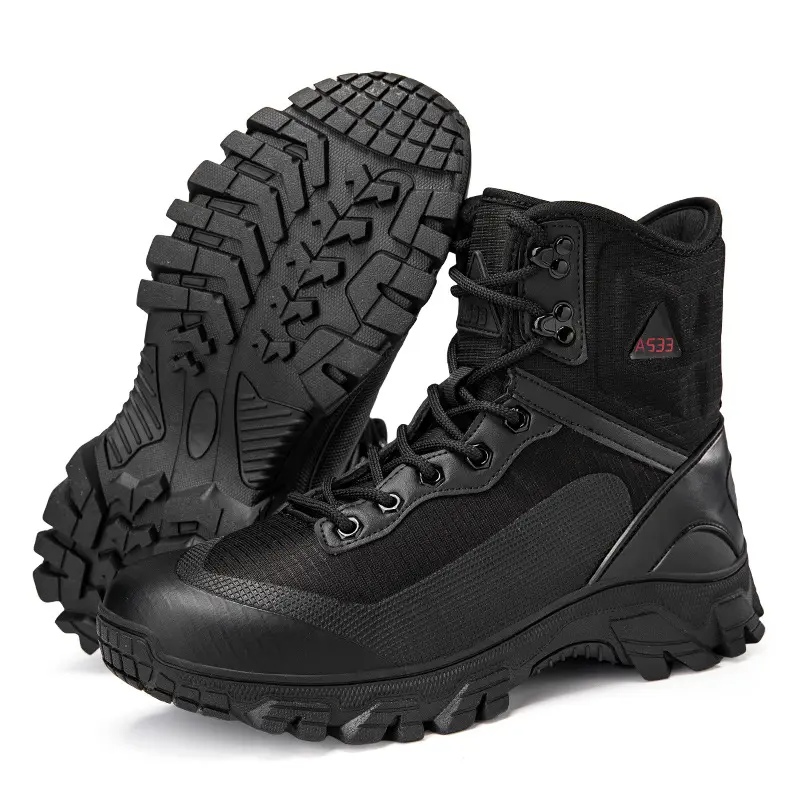
Support helps only when the boot still lets the foot move naturally. A high-top boot can steady the ankle, but a poor sample will announce itself around the heel, collar, or toe box. Stiff material is not automatically bad. The problem is stiffness in the wrong place.
The A533 boot gives buyers a useful sample to study. It uses EVA, rubber, mesh, PU, and polyester, with a side zipper for quicker wearing. The EVA midsole softens impact, and the non-slip, wear-resistant rubber outsole suits tactical outdoor use. At 1.2 kg per pair, it has more structure than many trail shoes.
Buyers comparing A533 tactical boots details should inspect ankle height, midsole cushion, lining, and outsole pattern together. Do not judge the boot from the upper alone. A comfortable collar still fails if the sole slips, while an aggressive sole will not help if the boot rubs badly during break-in.
| Hiking condition | Military boot advantage | Possible drawback |
| Rocky or mixed ground | Firm support and abrasion resistance | Weight may show up after several hours |
| Wet or muddy paths | Rubber outsole and water-resistant uppers can help | Hot feet become an issue if breathability is weak |
| Hot-weather walking | Durable uppers protect against brush and impact | Heat buildup can become the main complaint |
| Loaded training | High-top support can help under equipment weight | Small fit errors become painful faster |
Wholesale Buyers Need More Than One Boot Type
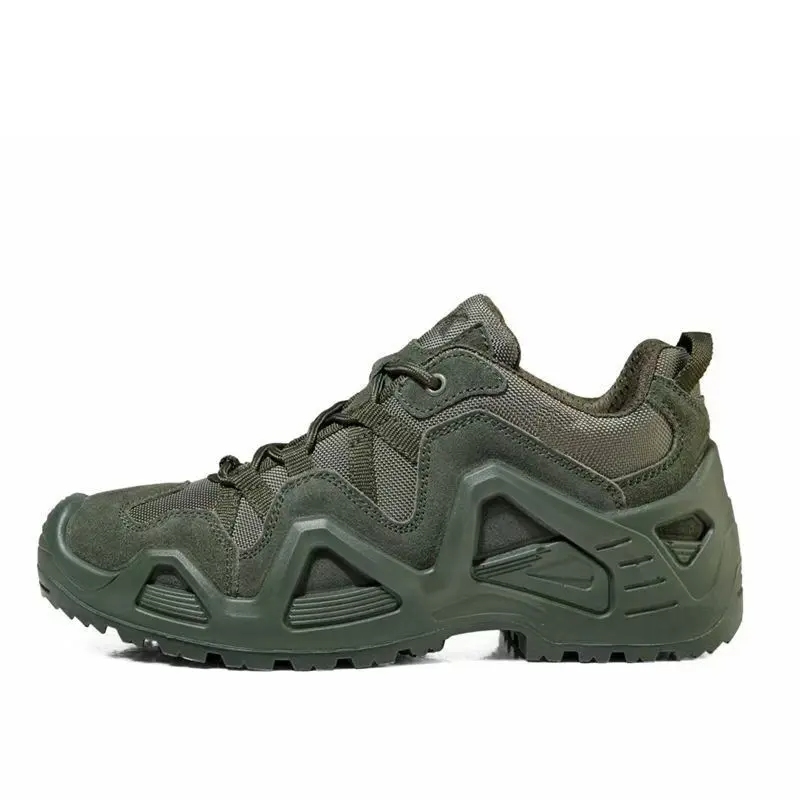
A distributor should avoid treating military boots as one universal product. Jingming Trading’s 07 Combat Boots and M16 Boots use rubber, cowhide, and Oxford cloth, with breathable linings and non-slip rubber outsoles for high-intensity tactical use. Several mid-top styles use composite uppers where flexibility and protection need a closer balance.
Low-top options solve a different problem. VW Hiking Boots use TPU, cotton fabric, and Oxford cloth, while Saloman Boots list cowhide and a rubber sole. Keeping these options separate makes the catalog easier to explain: one boot for patrol or training, another for hiking-adjacent outdoor use, and another for daily duty.
The best tactical boots for hiking are usually not the stiffest pair in the range. The stronger candidate is the sample that balances grip, shock absorption, upper durability, lining comfort, and a break-in period testers can realistically accept.
Useful checks before a bulk order
- Request sample pairs across the expected size range before a large order.
- Check upper material against climate, abrasion, and cleaning needs.
- Compare outsole pattern on wet ground, loose ground, and hard floors.
- Confirm waterproof expectations without forgetting breathability.
- Ask testers to walk, bend, climb, and stand instead of only trying the boot indoors.
Mixed Outdoor Use Needs A Simple Field Test
Military boots are good for hiking when the hike looks more like field movement: uneven ground, equipment weight, weather exposure, and a need for ankle support. They are less convincing on a long, smooth, hot recreational route where a lighter hiking boot or trail shoe may reduce fatigue.
Climate should be checked early. A waterproof upper may help in mud or wet grass. In hot regions, breathable lining may matter more because trapped moisture can turn a good-looking boot into a return problem.
For buyers building a mixed-use range, tactical military boots range should include high-top, mid-top, and low-top options. That mix lets retailers, uniform suppliers, and institutional buyers match boots to duty demands instead of forcing one construction into every use case.
Sampling should include real walking checks, not only tabletop inspection. Ask testers to walk on hard floor, loose ground, and stairs if possible. A boot can look durable in product photos and still fail if the collar rubs, the sole feels unstable on slopes, or the zipper presses into the foot when the upper flexes.
Summary: Fit The Boot To The Route
The answer to are military boots good for hiking is yes when terrain, load, and durability justify the structure. The answer becomes no when the wearer mainly needs light recreational comfort. Wholesale buyers should compare material, outsole, weight, support height, lining, and break-in expectations before choosing a model.
For outdoor duty ranges, security supply, or mixed tactical footwear sourcing, review the outdoor tactical product catalog and match boot models to the wearer’s terrain, climate, and load.
FAQ
Are army boots good for hiking in wet weather?
They can be useful in wet weather if the outsole grips well and the upper has waterproof or water-resistant construction. In warm climates, breathability still needs to be checked.
How long should military boots be broken in before hiking?
Break-in time varies by material and fit. Users should test the boots on shorter walks before using them for a long loaded route.
Are high-top boots always better for hiking?
High-top boots help with ankle support under load. They can feel restrictive, though, if the route is light and the wearer needs more flex.
What makes tactical boots comfortable for long shifts?
Comfort comes from fit first, then cushioning, lining breathability, outsole stability, and a weight level the wearer can tolerate over repeated hours.
Should wholesale buyers order one boot model for every use?
A mixed range is usually safer. High-top, mid-top, and low-top boots solve different terrain, mobility, and comfort problems.



