

A BDU kit might appear perfect in a catalog picture. However, it can still fail once a crew actually puts it on. Wholesalers, security firms, and corporate purchasers must look beyond the basic print. They need to ask a simple question. Will this outfit match the weather, physical activity, gear storage, body sizes, and group identity of the end users?
The Kit Starts With the Uniform Set
A true BDU kit starts with the top and bottom functioning as a single unit. They are not just two items of the same color. The user requires good body coverage and easy pocket reach. Furthermore, they need enough space to bend or reach up. They cannot afford to drag heavy material that turns warm, rigid, or clumsy during outside shifts.
The standard BDU camouflage outfit from Jingming Trading relies on a 65% polyester and 35% cotton T65/C35 blend. It features a specified material weight between 215 and 220 g/m². Available sizes range from S up to 3XL. These figures are not just for show. They clearly inform the purchaser about moisture evaporation, rip strength, size availability, and inventory management.
Jacket details shape daily usability
The top layer usually shows if the gear was made for hard labor or just for looks. Fasteners and zippers must feel solid. Chest pockets require practical space. Additionally, shoulder straps must lay flat for rank badges. Sleeve ends should also tighten without fraying after constant daily use.
Some clients are putting together a complete BDU kit for wholesale programs. For them, top-layer traits must be checked alongside material performance. Qualities that prevent color loss, shrinking, and creasing are vital. They allow an outfit to remain sharp after warehouse storage, shipping, and active outdoor duty.
Trousers decide how the kit performs in motion
The pants endure the harsh wear that a fast visual check often misses. Wide belt loops and a firm front clasp are essential. Deep leg pockets, rear pockets, and extra cloth layers at the knees or rear are deeply important. This becomes clear once the user drops to one knee, scales a wall, rests on the ground, or holds small instruments.
For bulk distribution, pant sizing needs a dedicated trial run. An outfit might fail during real work even if the top looks great. This happens when the pants stretch tightly at the knee joint. It also occurs if they rest poorly at the waistline or cause needless length issues across standard sizes.
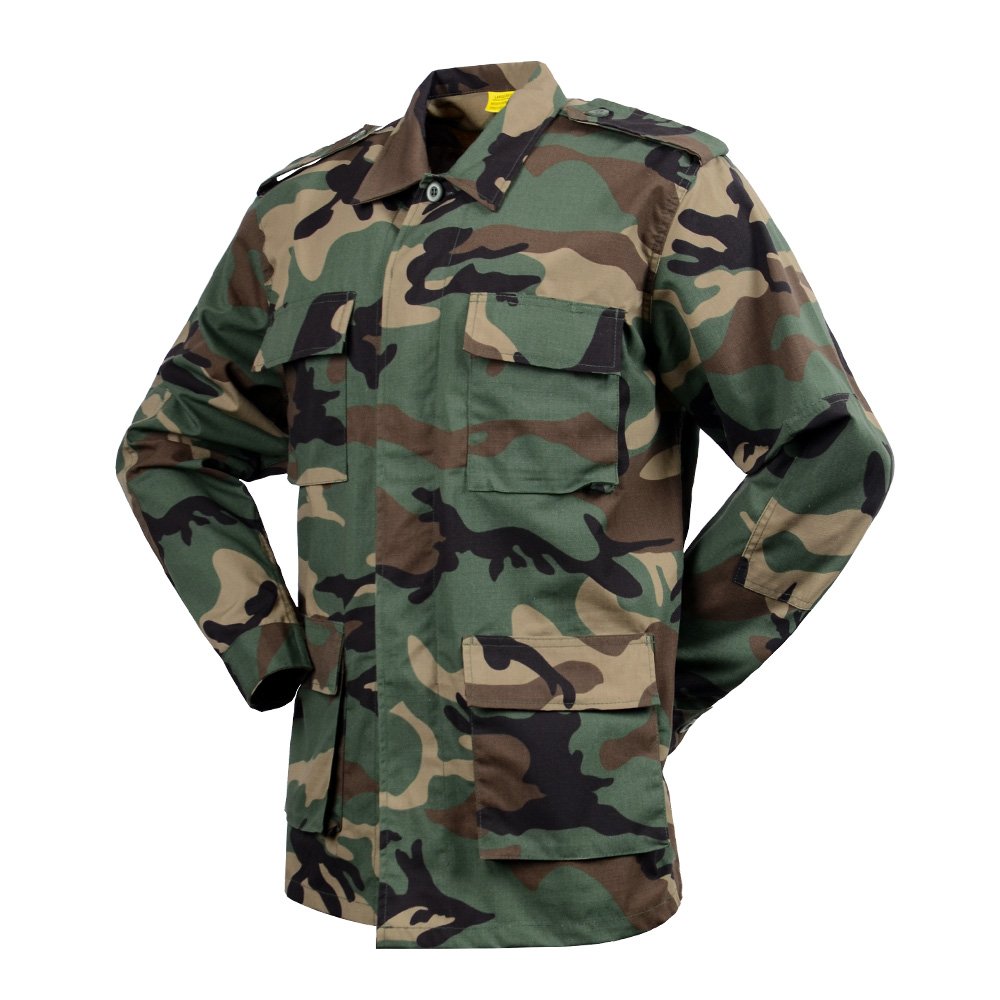
Fabric and Camouflage Need Separate Checks
Material makeup and visual patterns must be judged on two distinct levels. The cloth type dictates comfort, lifespan, wash shrinkage, and moisture control. Meanwhile, the visual pattern decides if the gear fits the user’s surroundings, branding, and dress codes.
Polyester and cotton mixtures stay popular in work apparel. They offer purchasers a highly functional balance. Jingming Trading provides multiple outfit types utilizing 65% polyester and 35% cotton. At the same time, certain insulated coats feature 65/35 or 50/50 blends. In those cases, heat retention and touch softness heavily influence the final choice.
| Kit element | What to verify | Why it matters |
| Fabric | Composition, weight, breathability, tear resistance | Controls comfort, service life, and laundering behavior. |
| Pattern | Woodland, desert, frog suit, or requested camouflage | Keeps the kit aligned with environment and buyer identity. |
| Jacket | Pockets, collar, closure, cuffs, shoulder tabs | Determines storage, appearance, and daily usability. |
| Trousers | Waist fit, pockets, knees, seat, ankle design | Affects movement, bending, and equipment carry. |
| Supply plan | Sizes, sample support, stock level, customization | Reduces order risk before bulk production. |
Pattern demand should not override fabric suitability
A highly requested design can still be a poor pick. This happens if the cloth weight or texture fails to suit the local weather. Warm areas demand high airflow and rapid moisture drying. Conversely, chilly outdoor tasks might require a top layer or inner shell offering robust wind and moisture blocking.
Because of this, BDU camouflage uniform options must be evaluated by visual appeal and physical build. Purchasers who simply check the visual design might overlook bad pocket layouts, poor wrist straps, or weak knee guards. These flaws quickly surface during early field operations.
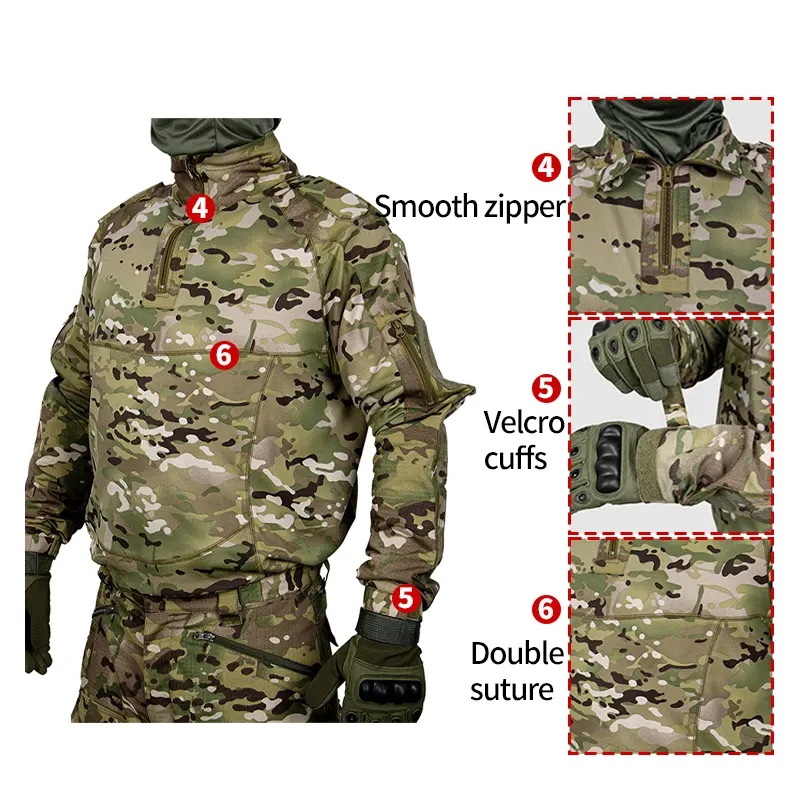
Wholesale Buyers Should Read the Kit as a System
A BDU kit is simpler to order when the purchaser visualizes an actual worker. They should not just see a random bulk number. A patrol squad, wilderness training group, supply staff, or state agency might all require camouflage gear. However, every single group pushes the clothing to its limits in distinct ways.
For large volume purchases, a brief trial guide keeps the discussion practical:
- Confirm the size range and grading plan before approving the first sample.
- Review jacket and trouser pocket placement with the equipment the wearer carries.
- Test bending, squatting, arm lift, and belt use rather than judging the set only on a hanger.
- Match fabric weight and lining to climate, storage time, and laundering expectations.
- Agree logo, patch, color, or custom pattern requirements before production begins.
Sample approval protects the bulk order
Trial evaluation requires more than a simple flat image. Jingming Trading provides a seven-day trial dispatch for its standard apparel types. This grants purchasers adequate time to inspect cloth texture, pocket locations, fastener durability, size scale, and boxing quality. They can do this well before the massive batch is finalized.
Manufacturing proof is highly important when a contract features multiple product codes or demands ongoing restocking. Jingming Trading runs a Guangzhou facility equipped with both making and selling functions. It houses over 200 factory staff and a storage space of roughly 5,300 m². Furthermore, it holds over 100,000 units in ready stock. This setup is highly beneficial for purchasers organizing long-term resupply instead of a single trial run.
Customization Belongs in the Specification, Not Later
Tailored changes are much easier to handle when they are placed in the initial outline. This must happen before the price quote is locked. Hook-and-loop patches, shoulder straps, unique print shades, shifted pocket spots, or paired pant styles all impact trial runs, pricing, and factory scheduling.
When military uniforms for trade buyers are sourced for full units instead of single persons, the outline must be precise. It must state the cloth, cut, shade, size mix, trial benchmark, boxing, and checking process in a single file. This prevents the outfit from splitting into uncoordinated top and bottom choices.
Standard checks function best when they reflect the gear’s actual daily duty. A formal guard outfit might focus heavily on shade matching and a sharp silhouette. In contrast, a rugged outdoor outfit might focus on rip prevention, thick knees, tight wrists, and rapid reach to gear pouches.
Practical Takeaway
A complete BDU kit is defined by seamless field function, not merely by visual prints. The purchaser’s ultimate review must evaluate cloth type, top layer build, pant flexibility, pocket layout, body fit, trial proof, and specific tailored needs. This must occur before the outfit is deemed ready for large-scale distribution.
For a massive apparel project, Jingming Trading can assist in evaluating current BDU types, tactical shirt choices, and custom traits. They match these elements against the purchaser’s specific sector and daily duty environments.
FAQ
What does a BDU kit usually include?
A standard BDU kit typically contains a printed top and matching pants. Certain projects also pair footwear, straps, headgear, badges, or utility gear. This ensures the unit gets a fully uniform outdoor setup.
Is BDU camouflage the same as the uniform construction?
No. The printed design dictates the outward look. Meanwhile, the build involves the cloth, thread work, pouches, fasteners, wrist bands, waist shape, and extra padding. Each aspect requires a distinct review.
What fabric is common for wholesale BDU uniforms?
A mix of polyester and cotton is widely used. It effectively balances user comfort, moisture drying, and visual sharpness. Jingming Trading offers multiple BDU and tactical shirt types utilizing 65% polyester and 35% cotton.
How should buyers check BDU fit before ordering?
Purchasers must evaluate overhead reach, chair sitting, forward bending, low crouching, strap function, pouch reach, and pant drop across typical body sizes. If the trial unit only feels good during static standing, it has not faced a proper test.
Can a BDU kit be customized for unit identity?
Yes. Purchasers can inspect shades, print styles, badge spots, emblem mounting, shoulder straps, and similar design elements during the trial phase. This is perfectly fine as long as the modifications are locked in before mass manufacturing starts.



