
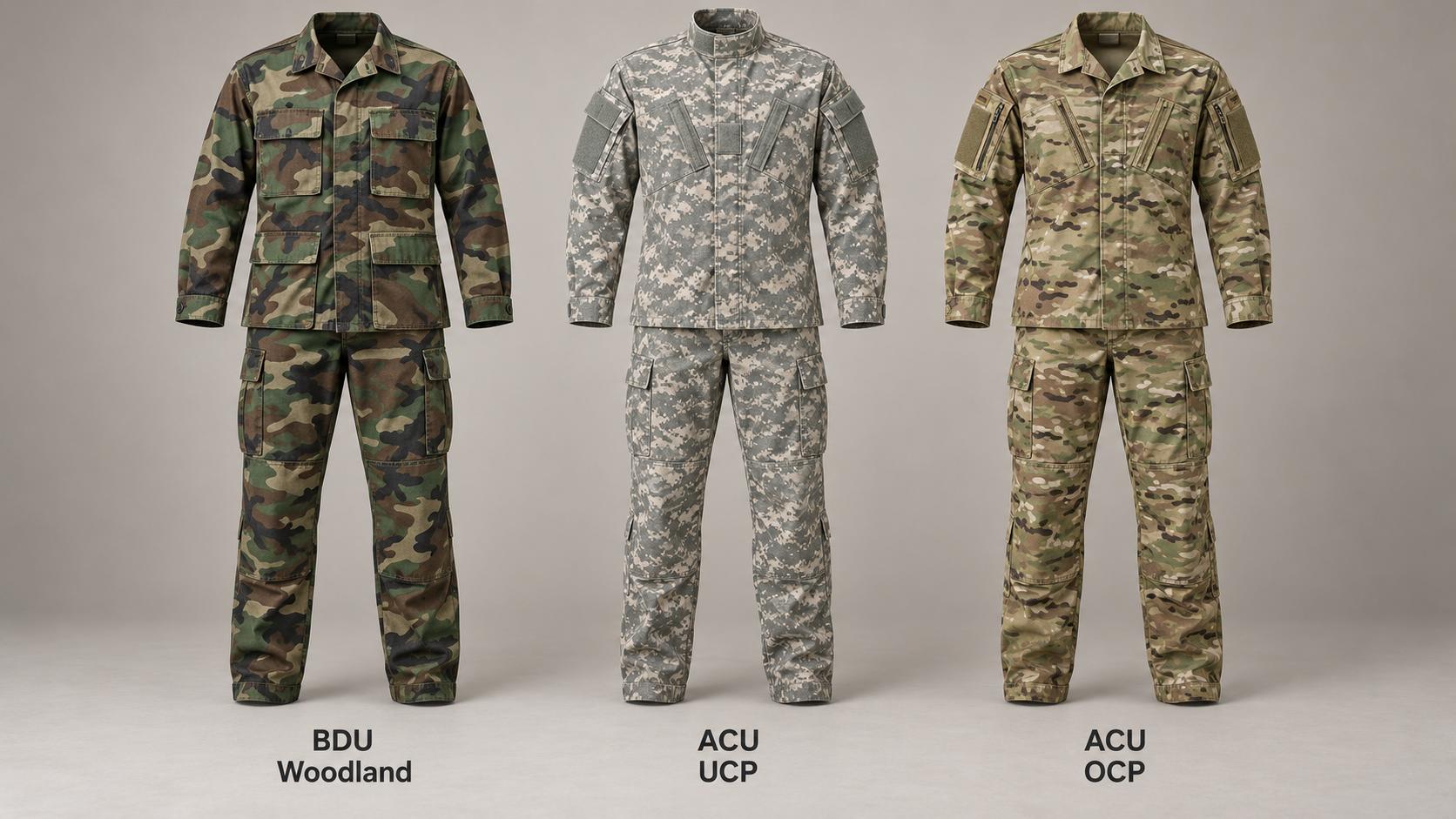
Uniform buyers often inherit old names before they get a clear specification. BDU, ACU, and OCP are good examples. They point to different moments in field-uniform design, from older pocket layouts to newer equipment access and camouflage expectations. For institutional buyers and uniform suppliers, the comparison is useful only when the name leads to a clearer garment spec.
BDU Became The Familiar Field Uniform Reference
The Battle Dress Uniform, usually shortened to BDU, became familiar because it paired a field jacket and trousers with practical pockets, durable fabric, and camouflage patterns suited to its period. A bdu vs acu comparison often begins here because many buyers still use BDU as the older reference point.
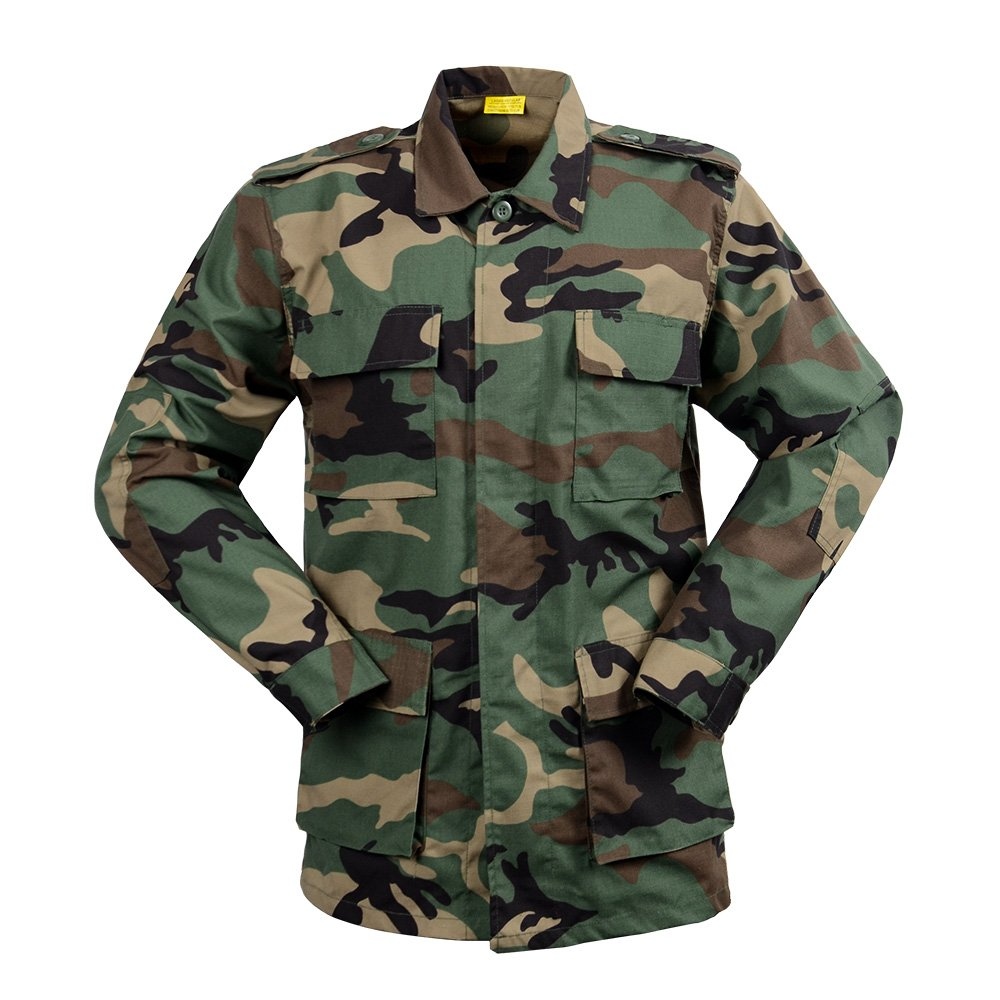
A BDU-style uniform still has value when the buyer wants a recognizable field cut, button closures, reinforced trousers, and a classic camouflage appearance. Jingming Trading’s BDU camouflage uniform set uses 65% polyester and 35% cotton T65/C35 fabric, offers sizes from S to 3XL, and lists breathable, tear-resistant performance for military outdoor activities.
Typical BDU-style details
BDU-style garments often emphasize square chest pockets, adjustable cuffs, shoulder epaulette positions, belt compatibility, side pockets, and reinforced knee or seat areas. These are not decorative details. They decide how well the uniform carries small items and handles repeated field movement.
Why buyers still ask about BDU
Buyers still ask about BDU because the name is easy to understand and widely recognized. It can serve security, training, outdoor, and institutional uses where the uniform does not need to match a current U.S. military issue standard.
ACU Changed The Cut And Equipment Interface
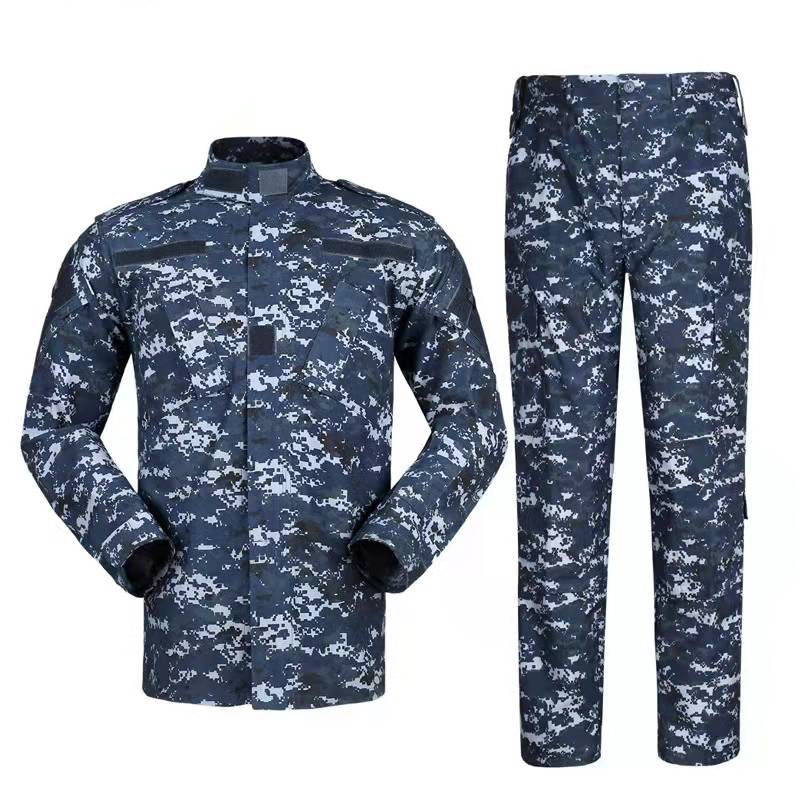
The Army Combat Uniform, or ACU, changed more than the camouflage pattern. Its field logic moved toward shoulder pockets, hook-and-loop identification areas, easier access under load-bearing gear, and a more modern jacket-and-trouser layout.
The phrase acu vs bdu often hides several separate questions. One question is pattern. Another is pocket placement. A third is whether the uniform works under armor, vest straps, and fast identification needs. Those questions should be kept separate when the buyer writes a purchase specification.
Jingming Trading’s G9 Frog Suit illustrates this more modern direction with a half zipper, stand-up collar, shoulder pockets and Velcro, thickened elbows, adjustable cuffs, EVA pads on the arms and knees, and T65/C35 fabric at 215 to 220 g/m2. Buyers reviewing G9 Frog Suit details can see how the cut supports protective and load-bearing equipment better than a simple legacy shirt.
OCP Put Pattern Performance Back In Focus
Operational Camouflage Pattern, or OCP, is mostly discussed as a pattern direction rather than one garment construction. The U.S. Army’s move away from UCP toward OCP made color environment, pattern matching, and branch requirements more visible to buyers.
A bdu vs ocp search usually asks whether an older field-uniform idea still fits modern camouflage expectations. The answer depends on whether the buyer needs historical styling, security-use camouflage, or a pattern family closer to modern operational environments.
For wholesale supply, tactical uniforms product range should be evaluated by fabric blend, size range, pattern options, reinforcement, closure design, and logo or identification needs. A pattern name alone does not settle the quality question.
Color environment also affects how the pattern is received. Woodland, desert, urban, and transitional camouflage expectations vary by user group, so the buyer should define the wearing environment before narrowing the pattern list.
Wholesale Uniform Specs Should Avoid Name-Only Orders
A uniform order built only around BDU, ACU, or OCP can leave too much unsaid. The same name may be used differently across markets, so the safer request includes fabric, weight, pocket layout, reinforcement, size range, pattern, and branding details.
Jingming Trading supports in-stock uniform supply across several tactical garments and can support sample confirmation. It also offers OEM and ODM support for tactical and security products, which matters when buyers need a familiar style adjusted for institutional identity or regional use.
Sample review should include both garment appearance and movement. The buyer can check whether shoulder areas bind under a vest, whether trouser pockets remain reachable, and whether reinforcement points match kneeling, sitting, and field movement.
Specification points that prevent confusion
State whether the request is pattern-led or cut-led.
Confirm fabric blend, weight, and tear-resistant needs.
Specify jacket closures, trouser pockets, knee reinforcement, and cuffs.
Confirm size range, logo placement, and sample expectations.
Buyers needing a broader service discussion can compare OEM and ODM service support with the exact uniform specification before asking for a sample or bulk plan.
Summary: Names Help, Specifications Decide
BDU, ACU, and OCP are useful shorthand, but each points to a different decision layer. BDU often describes a classic field-uniform style. ACU points to a more modern combat-uniform cut. OCP focuses attention on current camouflage expectations. A strong wholesale request turns those names into fabric, pattern, construction, and size details.
For institutional uniform programs, the next step is to define the required cut, pattern, fabric, quantity range, and logo or identification needs before discussing samples.
That approach keeps the conversation practical. The uniform name guides the first comparison, while the final specification controls comfort, durability, and visual consistency across the issued set.
FAQ
What does BDU mean in uniforms?
BDU means Battle Dress Uniform, a field-uniform style associated with durable camouflage garments and practical pocket layouts.
Is ACU newer than BDU?
ACU is a later uniform system and is commonly associated with updated pocket placement, identification areas, and equipment compatibility.
Is OCP the same as ACU?
OCP is a camouflage pattern family, while ACU refers to a uniform system and cut. The terms can overlap in use but do not mean the same thing.
Can BDU-style uniforms still be ordered for security use?
BDU-style uniforms can still be suitable when the buyer needs recognizable field styling, durable fabric, and a practical camouflage uniform outside current U.S. issue requirements.
What should buyers specify besides camouflage name?
Buyers should specify fabric blend, weight, size range, pocket layout, reinforcement points, closure system, pattern, logo placement, sample needs, and quantity.



