
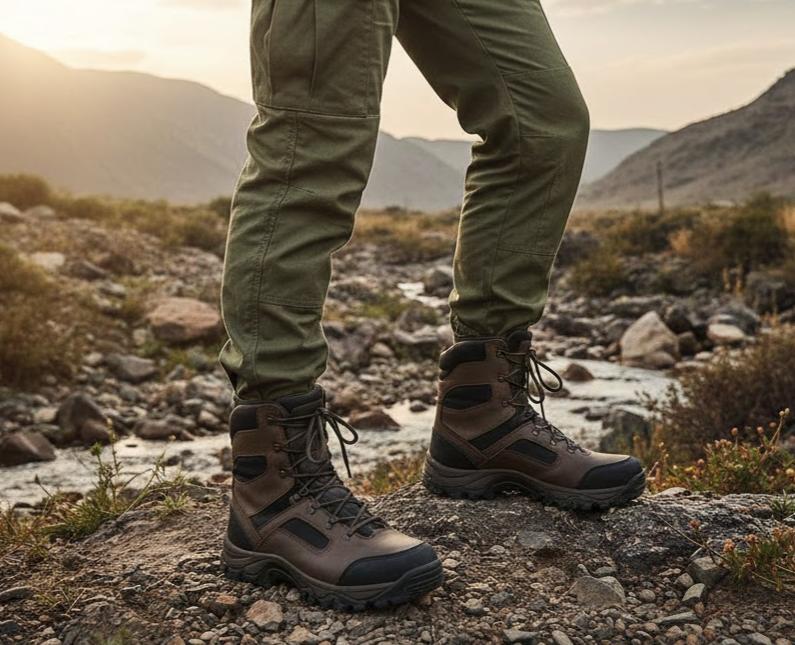
Boot names tend to blur when a purchaser looks at samples for patrol work, outdoor training, security tasks, and hiking-style movement. Combat boots, tactical boots, and hiking boots all protect the foot. However, they solve different problems. A clearer comparison begins with terrain. It also includes carried load, shift length, and how much ankle and outsole protection the user actually requires.
Use Case Decides the Right Boot Category
The proper boot category relies on the specific job long before it depends on the product label. Combat boots are typically selected for durability, uniform style, and field protection. Tactical boots favor fast movement, lighter build, and daily duty comfort. Hiking boots prioritize trail grip, soft cushioning, and weather control over uniform styling.
For wholesale buyers and security suppliers, the main question is not which boot sounds tougher on a catalog page. Instead, it is which construction will decrease complaints about fatigue, slipping, heat buildup, or slow break-in periods within the buyer’s target market.
Combat boots emphasize protection and uniformity
Combat boots generally fit buyers who require a highly traditional duty profile. A tall upper, strong lacing, reinforced materials, and a hard outsole protect the ankle and foot. This is especially true when the user carries heavy gear or crosses rough ground.
When comparing combat boots vs tactical boots for duty supply, buyers must check whether the heavy structure adds real protection. Sometimes, it merely makes long shifts more exhausting. The correct answer changes based on terrain, local climate, and the wearer’s daily load.
Tactical boots focus on movement and daily duty
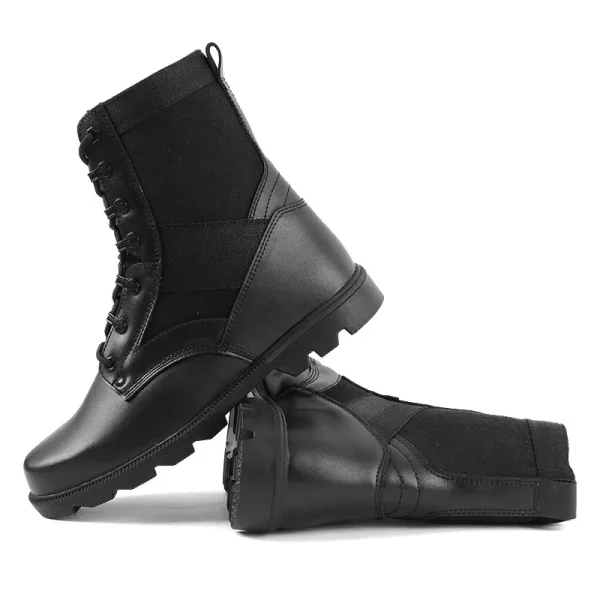
Tactical boots frequently sit right between combat appearance and everyday comfort. Jingming Trading’s 07 Combat Boots and M16 Boots utilize rubber, cowhide, and Oxford cloth. They feature anti-slip, wear-resistant, breathable, and tear-resistant qualities designed for outdoor military activities.
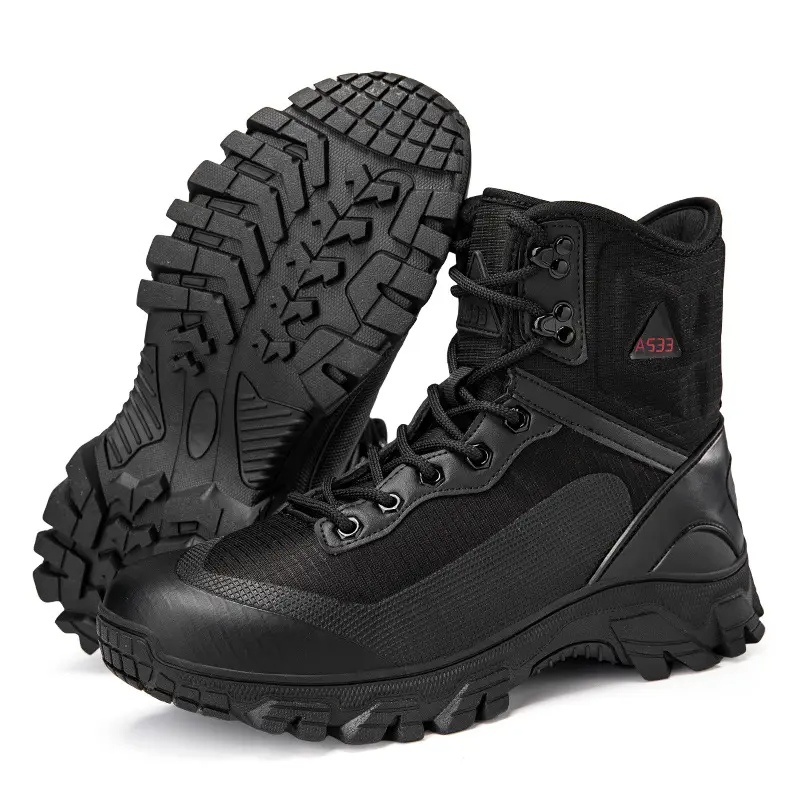
The A533 boots combine EVA, rubber, mesh, PU, and polyester. A side zipper, EVA midsole, rubber outsole, breathable mesh and PU upper, high-top support, and polyester lining make this model highly relevant. It works well where comfort, quick on-off access, and shock absorption truly matter.
Construction Details Explain the Real Difference
The construction comparison must cover upper material, ankle height, outsole grip, cushioning, water resistance, and expected break-in time. A name alone cannot show a buyer whether a boot will fit patrol work, warehouse security, long walking routes, or harsh outdoor training.
| Boot type | Main strength | Buyer caution |
| Combat boots | Durability, ankle coverage, uniform appearance | May feel heavier and need more break-in time. |
| Tactical boots | Duty mobility, faster wear-in, protective structure | Quality varies widely by outsole, upper, and lining. |
| Hiking boots | Trail comfort, cushioning, weather protection | May not match uniform, security, or tactical presentation needs. |
| Low-top boots | Lighter walking feel and faster flex | Less ankle support for load carriage or rough movement. |
| High-top boots | Better ankle support and protection | Can run warmer and feel restrictive if poorly fitted. |
Upper material affects protection and breathability
Upper material controls the balance between physical protection and heat management. Cowhide and Oxford cloth support a tougher duty profile. Meanwhile, mesh, PU, and polyester combinations can boost breathability. They also reduce the heavy feeling that makes certain boots tiring over a long day.
For tactical boots vs hiking boots comparisons, buyers should avoid trusting a single comfort claim. Breathable lining, midsole cushioning, outsole pattern, and upper flexibility all function together. This is especially vital for users who stand or walk for most of their shift.
Outsole design controls grip and confidence
Outsole design matters immensely when the user transitions between different surfaces. Jingming Trading provides non-slip rubber outsoles, all-terrain grip, and gear-style sole texture across several boot options. This variety helps buyers match their stock to wet floors, gravel, outdoor training, or general patrol tasks.
The buyer should bend and twist the sample boot. They must inspect tread depth and compare the outsole edge. A sole that feels excessively soft might wear out quickly. Conversely, a sole that feels too stiff may appear reassuring at first. However, it will punish the foot during long walking routes.
Hiking Performance Does Not Automatically Mean Duty Performance
Hiking boots can be fantastic for trail comfort. However, they are not always the correct answer for tactical or security buyers. Many hiking boots focus heavily on recreational terrain, waterproof membranes, and a soft, cushioned stride. Duty users might also require black colorways, strict uniform compatibility, side zippers, tougher toe areas, and a highly controlled appearance.
Reader interest in whether military boots are suitable for hiking usually stems from a practical terrain question. Military-style boots can perform well on certain hikes when ankle support and durable construction truly matter. But a light hiking boot might be superior for fast day hikes, hot weather, or long trail mileage with minimal load.
That is exactly why military boots vs hiking boots selection must be linked to the expected work. It should not be treated as a universal ranking. The exact same boot can feel incredibly stable in a training yard yet far too warm on a summer trail.
Wholesale Selection Should Match the End User
Wholesale purchasers must build their boot range around the specific people who will wear it. A security distributor might need black high-top boots with a breathable lining. An outdoor supplier might require lighter, lower-cut stock. A police or tactical buyer may value side zippers, firm ankle support, and repeatable sizing far more than trail-brand styling.
Before confirming a large bulk boot order, buyers need a sample check that feels very close to real use:
- Upper material, lining, and whether the boot traps heat in the target climate.
- Outsole grip on wet floors, pavement, gravel, and uneven outdoor ground.
- Midsole cushioning and fatigue level after several hours of walking or standing.
- Ankle height, heel hold, toe space, and lacing control across common sizes.
- Carton packing, sample timing, color options, and expected replenishment plan.
Sample testing should copy real movement
A proper sample test must include walking, climbing stairs, kneeling, short running, vehicle entry, and standing time. Jingming Trading supports seven-day sample order delivery for listed military boot models. This gives buyers a highly practical window to check size feedback, zipper handling, outsole grip, and overall comfort before scaling the order up.
Bulk planning also benefits greatly from keeping model claims completely separate. A533 boots, mid-top Tiger Wolf Boots, Flying Boots, Storm Boots, VW Hiking Boots, and low-top tactical models must not share the exact same comfort or weight claim unless the material, upper, outsole, and listed weight details truly match.
Practical Takeaway
Combat boots make the most sense when physical protection, ankle coverage, and uniform duty appearance matter deeply. Tactical boots are frequently the flexible middle choice for security, patrol, and general outdoor duty. Hiking boots are highly useful for trail comfort. However, they do not automatically meet tactical presentation or strict duty procurement needs.
For wholesale boot programs, Jingming Trading can help buyers carefully compare high-top, mid-top, and low-top tactical boot options against the end user’s terrain, shift length, climate, and budget expectations before final stock is confirmed.
FAQ
Are tactical boots the same as combat boots?
Not always. Combat boots often emphasize heavy protection and traditional duty construction. Tactical boots may utilize lighter materials, side zippers, breathable panels, or soft cushioning for faster daily movement.
Are military boots good for hiking?
They can function well for some hikes, especially when ankle support and high durability matter. For hot weather, speed hiking, or light day hikes, a standard hiking boot might feel cooler and much more flexible.
What should wholesalers check in tactical boots?
Wholesalers must check upper material, outsole grip, internal lining, midsole cushioning, zipper quality, ankle support, size range, packing methods, and sample feedback before they place any bulk order.
Do hiking boots last longer than tactical boots?
Service life depends heavily on materials, outsole compound, terrain, wearer weight, and usage frequency. A premium quality tactical boot can outlast a weak hiking boot during duty use. The reverse can also be totally true on technical trails.
Which boot type is best for long shifts?
A long-shift boot must balance cushioning, grip, breathability, ankle control, and total weight. Many buyers prefer tactical boots when the wearer needs both a professional appearance and continuous all-day movement.



