
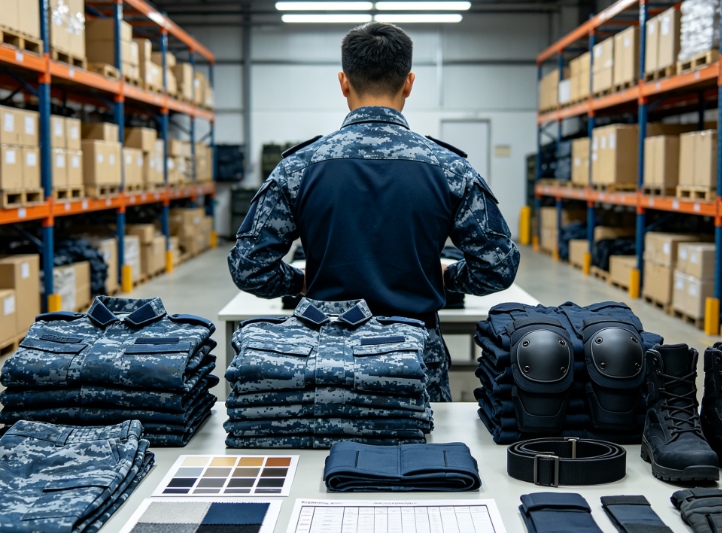
Marine and special operations uniforms face tougher challenges than regular field clothes. They must handle concealment and movement. Furthermore, they need to manage heat, kneeling, and crawling. Fast gear integration is also essential. This is because environments often shift during a single mission. Wholesalers and procurement teams should not just ask if a uniform looks tactical. Instead, they must focus on specific design details. These details make a uniform tough enough for coastal patrols. They also ensure reliability for security training and harsh outdoor deployments.
Operational Conditions Shape the Uniform
Special operations clothing begins with the operating environment. Fabric and construction act differently in various settings. These include intense heat, wet ground, thick brush, tight vehicles, and open training yards. A coastal or riverine unit might require quick ventilation and strong abrasion resistance. On the other hand, a security training group might prioritize pocket access. They often care more about rank patches and frequent washing.
Search interest around frogman uniform queries shows that readers often connect marine-style clothing with mobility, concealment, and amphibious identity. In wholesale selection, that intent should be translated into measurable garment features rather than costume-like styling.
Fabric performance is a practical filter
A reliable tactical uniform should balance breathability, tear resistance, color stability, and manageable fabric weight. Jingming Trading supplies military uniform sets using T65/C35 polyester-cotton fabric, with common fabric weight around 215-220 g/m2 and size coverage from S to 3XL. That combination supports stocked programs where buyers need repeatable sizing and consistent fabric behavior.
Garment structure affects field movement
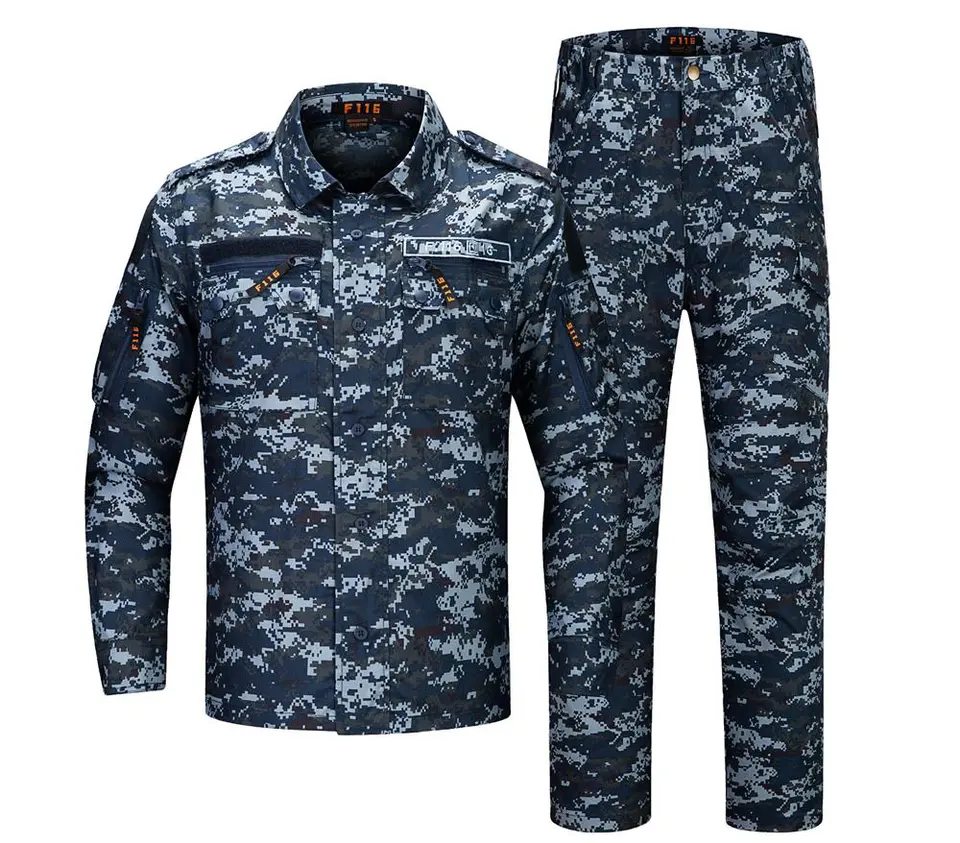
Movement-sensitive details matter a great deal. They become vital when the wearer bends or shoulders heavy gear. They are also crucial for working low to the ground. The G9 Frog Suit features a half zipper and a stand-up collar. It includes shoulder pockets with Velcro and thickened elbows. Users will also find adjustable cuffs and EVA arm pads. Additionally, it offers double-layer knees, EVA knee pads, and multiple trouser pockets. These specific details help the uniform function like real work equipment. It performs much better than a basic camouflage garment.
| Uniform detail | Why it matters | Procurement note |
| T65/C35 fabric | Balances durability and breathability | Check fabric weight and hand feel in samples |
| EVA elbow and knee pads | Supports crawling, kneeling, and training use | Confirm pad placement against target sizes |
| Shoulder Velcro and pockets | Supports patches and small-item access | Match layout to unit identity needs |
| Double-layer knees | Reduces wear at high-contact points | Useful for patrol and training orders |
Camouflage and Identification Need Different Thinking
Camouflage choice should follow terrain and unit role instead of fashion. Woodland, desert, blue, and security-oriented patterns create different visual signals, and procurement teams should avoid treating one pattern as universally suitable for every buyer, climate, or end user.
The broader demand for military camouflage jackets also points to a practical split between concealment and identification. A jacket may need camouflage for field blending, but it may also need Velcro areas, shoulder tabs, or logo customization for organized teams.
Marine-style uniforms require controlled claims
Marine and special operations references can attract search traffic, but a supplier article should not imply official military issue or restricted-unit authenticity without evidence. The safer wholesale approach is to explain design requirements: fabric durability, reinforced stress points, pocket layout, ventilation, and customization capacity.
Customization should support the mission
Customization is useful when it clarifies identity, sizing, and deployment needs. Jingming Trading supports logo customization, pattern customization, and packaging customization on the G9 Frog Suit, with a listed minimum order quantity of 500 pieces for those options. That makes the topic relevant to wholesalers who manage consistent group presentation rather than one-off retail styling.
How Buyers Can Compare Uniform Options
A practical comparison should focus on the job the uniform must perform, not only on pattern names. Buyers can reduce sampling mistakes by separating visual requirements, movement requirements, climate requirements, and commercial requirements before requesting samples.
- Match the pattern to the expected terrain or team identity.
- Check fabric weight, breathability, and tear resistance before bulk approval.
- Review pockets, Velcro, collar shape, zipper use, and reinforced zones.
- Confirm size range, sample availability, logo placement, and packaging needs.
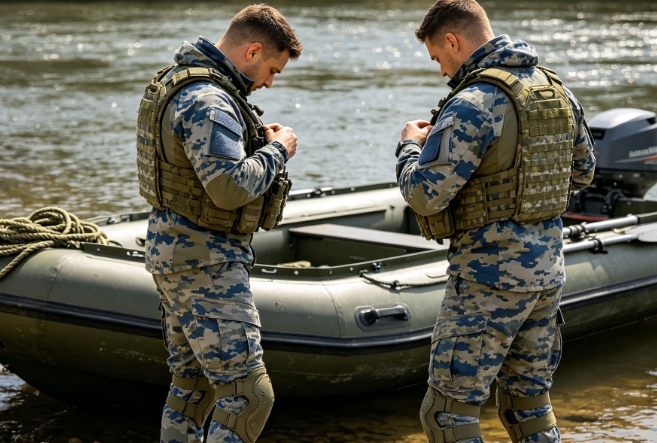
A complete BDU kit should also be checked beside boots, vest, helmet, belt, and backpack requirements when the buyer is building a full deployment package. Uniform comfort can be weakened if the rest of the equipment blocks ventilation or restricts movement.
Where Jingming Trading Fits the Supply Decision
After buyers define the operating environment and garment details, supplier capability becomes relevant because consistency matters across sizes, patterns, and repeat orders. Jingming Trading integrates development, production, and sales from Guangzhou, with a production area of more than 6,800 square meters, more than 200 production workers, a 5,300-square-meter warehouse, and more than 100,000 pieces of spot inventory.
The product range also supports coordinated sourcing across camouflage uniforms, military boots, tactical backpacks, tactical belts, tactical gloves, bulletproof vests, and bulletproof helmets. For buyers managing a uniform program rather than a single garment purchase, that range makes it easier to align appearance, function, and replenishment.
Summary for Uniform Buyers
A strong marine or special operations uniform article should lead buyers toward a disciplined comparison: environment first, fabric second, garment structure third, and customization only after the working requirements are clear. The best choice is the uniform that supports movement, identity, and repeatable supply without turning tactical appearance into unsupported performance claims.
For stocked or customized uniform programs, Jingming Trading can help buyers compare existing military uniform sets and confirm whether logo, pattern, and packaging customization fit the intended order scope.
FAQ
What makes a frogman uniform different from a standard BDU?
A frogman-style uniform usually emphasizes mobility, reinforced contact points, and mission identity more strongly than a basic field uniform. In wholesale sourcing, buyers should still verify fabric, pocket layout, reinforcement, and customization rather than relying on the name alone.
Are military camouflage jackets suitable for security teams?
Military camouflage jackets can suit security or training teams when the pattern, patch placement, and comfort level match the working environment. Buyers should avoid patterns that confuse identification or conflict with local rules.
Which uniform details matter most for long training days?
Breathable fabric, reinforced knees, adjustable cuffs, practical pockets, and stable sizing matter most during long training days. These details reduce discomfort and help the garment survive repeated movement.
Can one camouflage pattern work for every environment?
One camouflage pattern rarely works equally well everywhere. Woodland, desert, urban, and blue-toned designs serve different visibility and identity goals, so buyers should connect pattern choice to the actual terrain and team role.
What should wholesalers confirm before bulk customization?
Wholesalers should confirm sample quality, size range, fabric weight, logo position, pattern artwork, packaging format, and order quantity before bulk customization. That checklist keeps the final program close to the intended field use.



