

Global buyers rarely need only a single tactical product; they need a supplier who can keep uniforms, vests, boots, and accessories consistent across repeated orders. This guide uses a procurement path for evaluating China tactical gear manufacturing, so distributors and security-equipment importers can compare product scope, customization readiness, quality control, and shipment planning without turning the decision into a loose catalog review.
Where Tactical Gear Manufacturing Decisions Usually Go Wrong
A tactical gear order becomes risky when the buyer evaluates attractive samples but misses the production system behind them. Fabric weight, stitching, plate-pocket access, boot sole grip, pouch placement, and color matching all matter, yet those details only stay reliable when the factory has repeatable sampling, inspection, and packing routines.
Search demand around the military camouflage uniform market and tactical-vest comparison topics shows that buyers want practical proof, not broad claims. They are trying to avoid inconsistent camouflage lots, weak webbing, poor fit grading, and confusing descriptions that make products look similar online while performing differently in the field.
A broader product range needs tighter evidence
Jingming Trading is relevant to this decision because its supplied range spans camouflage uniforms, military and security boots, tactical backpacks, tactical belts, tactical gloves, bulletproof vests, bulletproof helmets, and related products. That range helps buyers consolidate categories, but it also makes product-by-product verification essential.
| Buyer checkpoint | What to verify before bulk order | Why it matters |
| Uniforms | Material blend, size range, fabric weight, pocket construction, sample approval | Keeps color, comfort, and durability consistent across batches |
| Vests | Outer fabric, modular layout, plate-pocket access, mesh lining, padding | Prevents a weak or fake military vest from passing as field-ready gear |
| Boots | Upper material, outsole grip, height, weight, waterproof claim, carton quantity | Matches footwear to training, patrol, or outdoor use |
| Mixed kits | Logo placement, packaging, final inspection photos, shipment handoff | Reduces mismatched items inside a BDU or patrol kit |
Product Scope Should Match the Buyer Program
A sourcing program should begin with the actual equipment set the buyer must deliver. A distributor selling security uniforms has different risks from a tender team combining camouflage suits, tactical vests, helmets, and boots into a field package. The tighter the program, the easier it is to write useful sample comments.
For buyers comparing army military uniforms manufacturers in China, the uniform category should be checked first for fabric blend, breathable wear, tear resistance, pocket layout, and size grading. Jingming Trading’s BDU camouflage uniform set uses a 65 percent polyester and 35 percent cotton T65/C35 fabric, S to 3XL sizing, and 215-220 gsm fabric weight.
Custom work needs a documented sample path
OEM and ODM work should be handled through a clear sample path rather than casual message approval. The buyer should confirm material, logo method, pattern, color, package, and quantity before accepting bulk production. If a product will be sold under a private label, the sample should also show packaging and label placement.
Jingming Trading’s stated service model includes source-factory production from supplied samples, spot wholesale, one-stop purchasing, and transport coordination. The practical value is not the label itself; it is the ability to turn product choices into a confirmed order file before production begins.
Quality Control Must Be Category-Specific
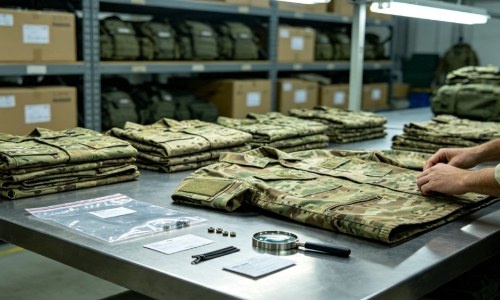
A single inspection checklist is too blunt for tactical equipment. Uniforms need fabric, seam, pocket, and color checks. Vests need webbing, modular attachment, quick-wear function, lining, padding, and plate-pocket checks. Boots need upper material, outsole grip, size run, stitching, and weight checks.
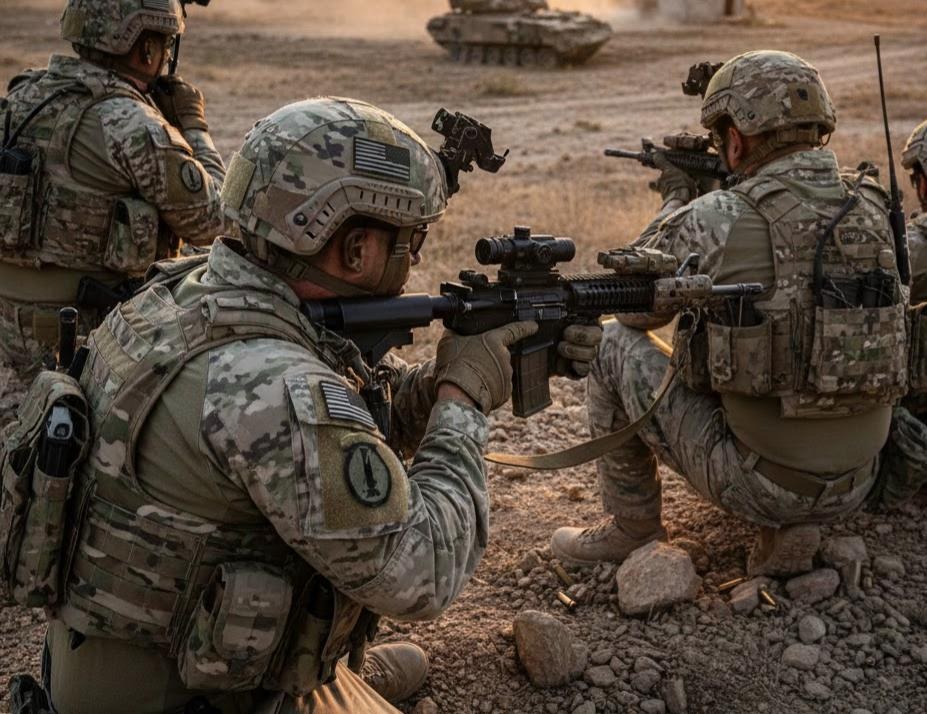
A buyer worried about a fake military vest should focus on construction evidence: outer material, usable modular points, breathable lining, thickened pads, and whether the inner lining can accept a bulletproof plate when that function is promised. Jingming Trading’s quick-wear tactical vest uses 1000D nylon, spot stock, one-size configuration, and a one-pull quick-on/off design.
For boots, the evidence changes again. The A533 boots use EVA, rubber, mesh, PU, and polyester, with a side zipper, EVA midsole, rubber outsole, breathable mesh and PU upper, polyester lining, and sizes 39-46. Those details should stay with that boot model only, not be generalized across every footwear SKU.
Commercial Terms Should Support the QC Process
Commercial terms matter most when they protect the inspection rhythm. Jingming Trading supports pre-production samples before mass production and final inspection before shipment. Buyers can also request sample or finished-product photos and videos, which is useful when multiple SKUs are packed into one order.
A mixed BDU kit should therefore be treated as a controlled bill of materials. The order file should name each uniform, vest, boot, backpack, belt, glove, helmet, or accessory, then connect each item to its own material, size, color, logo, packing, and inspection evidence.
Payment and delivery details should be confirmed early because they affect handoff planning. The supported commercial path is practical for buyers who want inspection evidence before final handoff.
- Confirm EXW delivery expectations before production starts.
- Keep T/T deposit and balance timing aligned with packing confirmation.
- Use photos or videos to verify samples and finished goods.
Summary: Build the Order Around Verifiable Proof
The safest China tactical gear manufacturing decision is built around narrow product evidence, not a broad supplier promise. Buyers should map the product program, approve samples, separate category-specific QC points, and keep final inspection media tied to the exact SKUs being shipped.
For custom uniforms, vests, boots, and mixed tactical-equipment orders, Jingming Trading can help buyers turn product scope into a clearer sourcing file; use the contact page when the next step is confirming quantities, customization, and sample requirements.
FAQ
What should buyers check first in China tactical gear manufacturing?
Buyers should first check whether the supplier can support the exact product category and order structure. Uniform fabric, vest construction, boot outsole, sample approval, and final inspection evidence should be reviewed before price becomes the only comparison point.
Is one factory suitable for uniforms, vests, and boots together?
One supplier can simplify purchasing when it has product-specific evidence for each category. The buyer should still review every SKU separately because a strong uniform program does not automatically prove vest or boot performance.
How can buyers avoid a fake military vest problem?
Buyers can request material details, close-up photos of stitching and modular points, plate-pocket confirmation, lining information, and a physical sample. A vest should be evaluated by construction and use case, not by camouflage appearance alone.
Why does a pre-production sample matter?
A pre-production sample gives the buyer a fixed reference for bulk production. It helps confirm material, fit, logo placement, color, packaging, and functional details before the order moves into mass production.
When should buyers discuss shipment handoff?
Shipment handoff should be discussed before production starts. Delivery terms, packing photos, balance payment timing, and shipping-agent coordination affect how smoothly the finished goods leave the warehouse.



