

Picking suitable shoes matters a lot for people in police work, guard groups, or action teams. The boots you wear affect how well you move, how comfortable you feel, how safe you stay, and how long you last on tough days, bumpy ground, or fast-action spots. In the choices out there, A533 boots stand out for mixing action skills with useful parts that fit hard job settings. This piece looks at what makes tactical boots different from usual combat and labor shoes, why they rank as the best boot for law enforcement, and how to figure out if A533 tactical boots match what you need.
Understanding Combat Boots and Tactical Boots
What Are Combat Boots?
Combat boots are tough shoes first made for troops in fight zones. They focus on lasting power, safety, and steadiness to handle long use in bad spots like dirt, stony paths, and bumpy areas. Standard combat boots usually have firm leather and strong bottoms to guard feet from hits, scrapes, and weather strains. Newer styles might add airier stuff for better air flow and ease without losing strength.
Combat boots center on safety. So, they tend to feel stiffer and weigh more than other job shoes. This firmness works well when the main worry is protection in risky places. But it can cut down speed and add tiredness over long periods.
What Are Tactical Boots?
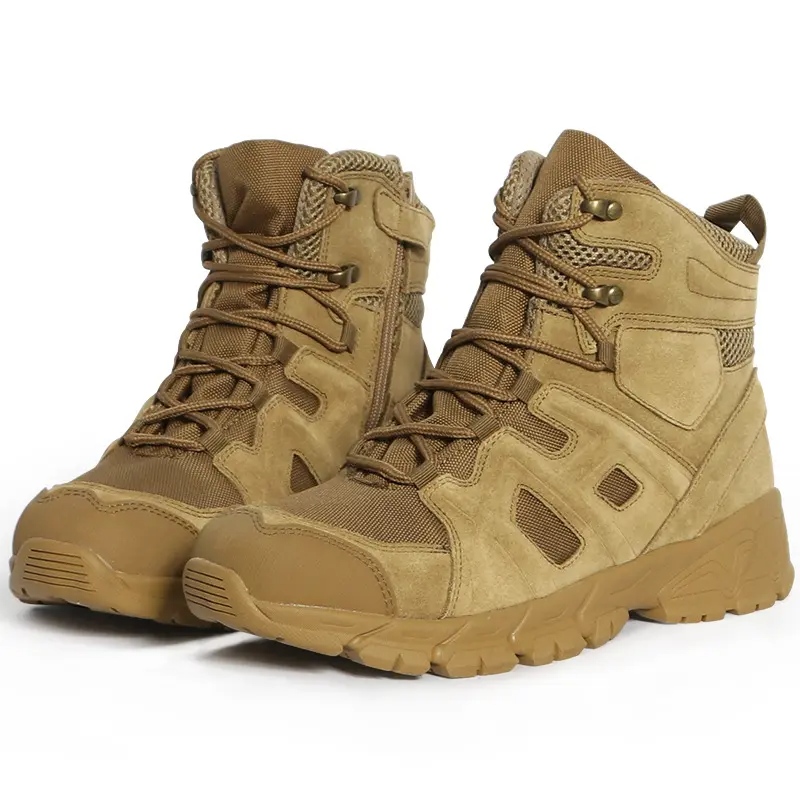
Tactical boots came about to mix safety with speed and ease. They suit police staff, emergency workers, and outside pros who need fast steps and many hours walking. Unlike standard combat boots, tactical boots mix fabrics like light netting, rubber, polyurethane (PU), and smart fake materials. This gives bend, air flow, and less total heaviness.
Main parts of tactical boots cover sweat-pulling insides, cushion midsoles for shocks, ankle support, grip bottoms that do not slide with hold tuned for city and wild spots, and simple fasteners like side pulls or fast ties. These traits let tactical boots work in different setups, from street walks to open land tasks.
Combat Boots vs Tactical Boots: Key Differences
Protection vs Agility
Combat boots stress top safety and lasting build with solid fabrics and extra-strong materials. They fit well for army trips and rough land where foot and ankle guards from bumps and natural risks come first. Yet, this thick setup can hold back movement and lead to weariness with long use.
Tactical boots aim to support agility, comfort, and multi-environment performance. So, they serve as a top pick for current police and guard workers who want fast reactions while keeping safety. Their slimmer form boosts movement. And it does so without dropping key safety.
Weight and Comfort
A big gap between combat boots and tactical boots shows in their heaviness. Combat boots often pick thick leather and a rough sole. As a result, they weigh more. This can hurt during long days or quick shifts. Tactical boots use light EVA midsoles and airy tops. Thus, they cut weight and raise ease over time.
For lots of officers, mainly those on watch or in city jobs, the best lightweight tactical boots give a strong edge. They lower foot tiredness. Plus, they lift speed.
Terrain and Use Cases
Combat boots fit for handling wild outside spots like mud, snow, or rocky soil. They often get made for set weather types, such as jungle or cold kinds. Tactical boots seek even work over mixed lands. These include streets, lawns, pebbles, and easy off-path spots.
A533 Tactical Boots: Features and Specs
Design and Construction
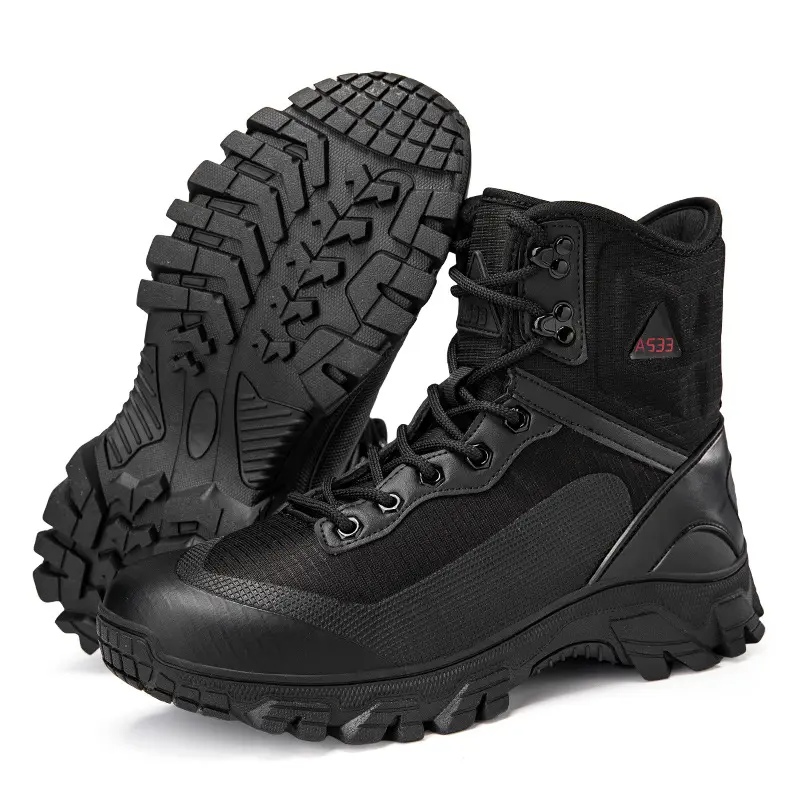
The A533 boots form a set of tactical shoes made and sent by Guangzhou Jingming Trading Co., Ltd. These boots get built for open-air action needs. They join real-world skills with strong fabrics that suit many job scenes.
Key Features of A533 Tactical Boots:
| Materials | EVA, rubber, mesh, PU, polyester |
| Midsole | Lightweight EVA for shock absorption and pressure relief |
| Outsole | Non-slip, wear-resistant rubber with strong grip |
| Upper | Breathable mesh + PU for comfort and durability |
| Support | High-top design for ankle stability |
| Closures | Side zipper for quick on/off |
| Additional | Waterproof, tear-resistant, moisture-wicking lining |
| Weight | Approx. 1.2 kg per pair |
| Sizes | EU 39–46 |
| Use | Military outdoor activities, patrol, training duties |
These parts let A533 boots tackle various jobs. From action practice runs to true police walks, they handle well.
A533 Boots Price Considerations
Prices change with the amount, custom work, fabric pick, and buy rules. So, A533 boots price comes from talks on factory costs, not set store tags. For big or custom-made buys, reach out to the seller right away. As direct-from-factory goods for export, A533 boots show good rates against world tactical shoe marks. This holds true for large buys aimed at group or pro use.
Comparing A533 Boots with Combat and Work Boots
When set against traditional combat boots, A533 tactical boots bring a slimmer build, finer air flow, and faster put-on ease. These stand as clear wins for everyday police work or mixed-land chores. The cushion EVA midsole and no-slide rubber bottom also raise foot ease and safety for long walking times.
Next to work boots, which get planned for build sites or factory spots, tactical shoes like the A533 line give sharper speed, better hold, and an easy fit to changing steps instead of still heavy lifts. Hence, they match closer to action and police tasks.
How to Choose the Best Boot for Law Enforcement
Choosing the best boot for law enforcement relies on exact job needs and place factors:
- Duty type:If the main job is city watch, open land work, or group handling, it shapes boot picks.
- Terrain:City and blended land jobs gain from light, bendy styles with solid hold.
- Comfort:Shoes with sweat-drawing layers and shock-cushion midsoles prove key for drawn-out days.
- Mobility:Putting speed and fast steps first may lead to tactical shoes over bulkier combat ones.
- Protection:For jobs with wildland or big bump risks, shoes with added guard count.
Tactical shoes that even out heaviness, ankle backing, and ease often count as the best choice for law enforcement professionals. They give steady work without too much tiredness.
FAQ
Are tactical boots suitable for military operations?
They work in many cases. But standard combat shoes might fit better for wild settings or special tasks.
How should I choose the right size for tactical or combat boots?
Right foot checks and brand size guides matter a lot. This holds true for planned long wear.
Why do law enforcement officers prefer tactical boots?
They bring finer movement, less weight, and steady ease on long days and mixed jobs.
Are A533 tactical boots good for outdoor training and patrol?
Yes — their no-slide bottom, airy build, and shock-cushion midsole make them handy for practice and job spots.



