

A tactical vest works well only when its configuration matches the task. In 2026, buyers and users are paying closer attention to lighter loadouts, modular attachments, faster access, and reduced heat buildup during extended outdoor activity. Carrying more equipment is not automatically better. Poor placement can slow movement, overload the front panel, and make essential items harder to reach.
At Jingming Trading, we approach tactical vest configuration from a practical product and procurement perspective. Our Quick-wear Tactical Vest uses 1000D Nylon, a fully modular structure, a one-pull quick-on and off design, and a breathable cotton mesh lining with thickened cotton pads. These features provide a useful foundation for building a tactical military vest around actual equipment needs rather than unnecessary bulk.
Why Does Tactical Vest Configuration Matter?
Tactical vest configuration determines how quickly equipment can be reached and how comfortably the load can be carried. A vest may have enough attachment space for multiple accessories, but available space should not be treated as a requirement to fill every position.
A poor setup often becomes front-heavy because users place the most frequently considered equipment on the chest. This can restrict bending and create concentrated pressure during longer wear. Side-heavy placement causes another problem: the vest may shift during walking, kneeling, or repeated changes in body position.
A more efficient approach begins with task duration, operating environment, access frequency, and expected movement. Short training activities may need a compact tactical vest gear setup. Longer outdoor operations may require hydration and additional utility equipment, but some of that load should move to a backpack instead of remaining on the vest.
How Should Gear Be Prioritized by Mission?
| Performance Area | Specification | Configuration Value |
| Main material | 1000D Nylon | Supports a wear-oriented tactical vest structure for outdoor use |
| Attachment structure | Fully modular and freely configurable | Allows accessories to be added, removed, or repositioned |
| Donning design | One-pull quick-on and off design | Supports faster wearing and removal |
| Internal comfort | Breathable cotton mesh and thickened cotton pads | Helps manage contact comfort during loaded wear |
How Should Tactical Vest Gear Be Positioned?
Gear position should reflect access frequency. Equipment used repeatedly belongs in a reachable zone, while low-frequency items should not occupy the most valuable front-panel space. This simple rule can make a tactical vest more efficient without adding any new accessories.
Front placement needs particular care. Thick pouches stacked over one another can increase bulk and interfere with bending. Side placement should be checked against natural arm movement. Rear placement is more suitable for equipment that does not require frequent independent access.
Emergency equipment should have a consistent location. Changing its position every time the tactical vest configuration is adjusted can create hesitation. The exact location depends on the user and task, but the position should remain identifiable and should not be blocked by another pouch or backpack strap.
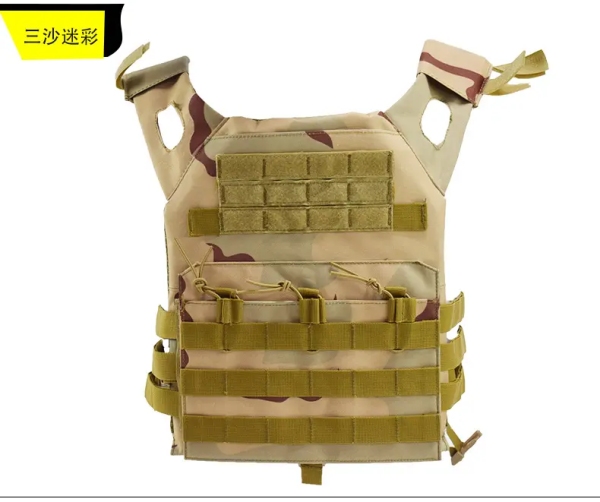
A modular tactical vest makes these adjustments easier. It also has all-around holes that can be customized for accessory installation. For buyers, this matters because different end-user groups may require different accessory arrangements rather than one fixed factory layout.
Why Does Weight Balance Affect Mobility?
Weight distribution becomes noticeable as soon as the user starts moving. A tactical vest that feels acceptable while standing may become uncomfortable after repeated walking, kneeling, bending, or turning.
Front-heavy configurations can pull the upper body forward and concentrate pressure around the shoulders. Excessive equipment on one side can cause the vest to shift. Large accessories placed too high may interfere with arm movement, while bulky lower-front placement can make bending more difficult.
The internal construction of the vest can support comfort, but it should not be used as an excuse for overloading. Our Quick-wear Tactical Vest includes breathable cotton mesh in the lining and thickened cotton pads for more comfortable wear. These are relevant product features for prolonged contact with the body, especially when a loaded tactical vest is used in outdoor conditions. However, the configuration still needs balanced placement.
For procurement teams, this is why capacity claims alone are not enough. A vest with many possible attachment points should be judged by how effectively users can distribute equipment across the available structure.
How Can a Modular Tactical Vest Adapt?
Modularity is valuable because equipment needs change. A fixed arrangement may work for one activity and become inefficient for another. The ability to remove or reposition accessories allows the tactical vest to follow the task instead of forcing the task around a permanent layout.
The Quick-wear Tactical Vest provides a clear example from our actual product information. Its modular structure can be freely configured, while its expandable design supports accessory installation. The one-pull quick-on and off mechanism adds another practical element by simplifying wearing and removal.
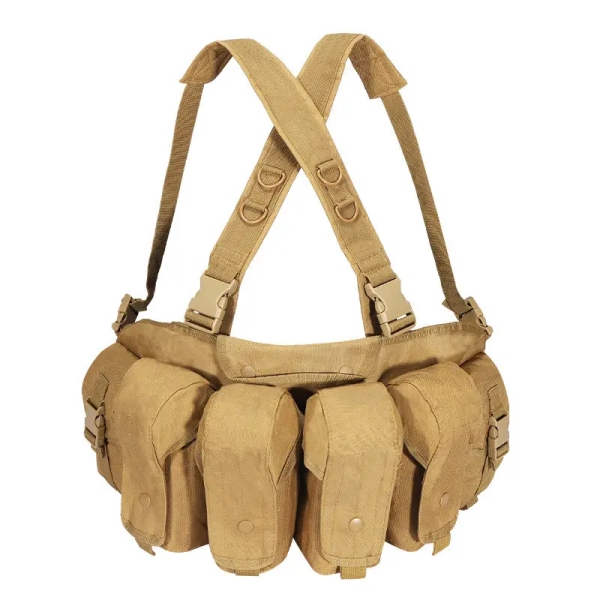
This combination is especially relevant to B2B buyers. A distributor may serve outdoor users, training organizations, security-related channels, or other customers with different load preferences. A modular tactical military vest gives buyers more room to define accessory arrangements for specific market requirements.
Conclusion
A useful tactical vest is not defined by how much equipment can be attached to it. Its value comes from controlled configuration, reliable access, balanced weight, and the ability to adapt when requirements change.
For 2026 procurement, modularity and load discipline should be considered together. The 1000D Nylon construction, fully modular structure, one-pull quick-on and off design, and breathable padded lining of the Quick-wear Tactical Vest provide a practical base for task-oriented configuration. Buyers should then select equipment according to access frequency, activity duration, and operating conditions.
At Jingming Trading, we support tactical and security product sourcing with sample confirmation, final inspection, and OEM/ODM services as stated in our company information. For wholesale or customized tactical vest requirements, contact us with your target quantity, configuration needs, and market application so that the product details can be reviewed before order confirmation.
FAQ
How much does a tactical vest cost for wholesale orders?
Tactical vest pricing depends on order quantity, customization requirements, configuration details, and other confirmed order conditions. For an accurate quotation, buyers should provide the required quantity and intended specifications. Our stated ordering process uses a 30% deposit after product and quantity confirmation, with the balance paid after packing confirmation and before delivery to the buyer’s shipping agent.
What tactical vest gear should be carried for outdoor use?
The correct tactical vest gear depends on duration, environment, and access frequency. Medical supplies, communication equipment, and compact utility items may require direct access, while larger hydration or low-frequency equipment may be better carried in a separate bag. The goal is to avoid unnecessary bulk.
Can a tactical vest configuration be customized for bulk orders?
Yes. Our company information states that we specialize in OEM/ODM for tactical and security products. The Quick-wear Tactical Vest also uses a modular structure that can be freely configured, with all-around holes that can be customized for accessory installation. Exact requirements should be confirmed before production.
How can buyers check tactical vest quality before mass production?
Our documented quality process includes pre-production samples before mass production and final inspection before shipment. When necessary, buyers can also request pictures or videos of samples or finished products for confirmation. This is particularly useful when checking configuration details and order consistency.



