
Mixed-terrain missions place unusual pressure on footwear. A route may move from rocky slopes to loose sand, paved streets, wet ground, and uneven trails within the same operation. For procurement teams, distributors, and security equipment buyers, the challenge is not simply finding a strong boot. It is selecting tactical combat boots that balance grip, wear resistance, moisture protection, ankle support, and movement efficiency without relying on one construction for every environment.
At Jingming Trading, we work with military and security footwear for different outdoor and training scenarios. Our product experience shows that special forces boots, running combat boots, and tactical combat boots should be treated as the same mission-oriented product category when buyers compare mobility requirements. The real difference lies in construction choices: outsole material, upper structure, cushioning, waterproof capability, and boot height.
Why Are Mixed-Terrain Missions Hard on Tactical Footwear?
Mixed terrain changes the mechanical demands placed on tactical combat boots. Rocky mountain paths require stable footing and support around the ankle. Sand creates a different problem because loose ground can reduce push-off efficiency and increase fatigue. Urban pavement repeatedly transfers impact through the outsole and midsole. Wet surfaces raise concerns about traction and moisture exposure.
These conditions often appear within one route rather than as isolated environments. A heavy, rigid boot may feel secure on rough ground but become tiring during fast urban movement. A low-cut design may offer freedom of movement but provide less ankle coverage on uneven slopes. This is why buyers evaluating special forces boots should begin with terrain exposure and movement patterns rather than appearance.
What Makes Special Forces Boots Different Across Terrain?
| Product | Primary Terrain Focus | Upper or Main Materials | Outsole / Midsole | Height | Weight per Pair | Size Range |
| 07 Combat Boots | Mountain and uneven terrain | Microfiber upper | Non-slip rubber outsole; lightweight cushioning midsole | High-top | 0.8 kg | 39–46 |
| A533-309 Boots | Urban and fast mixed movement | Mesh, PU, polyester | Rubber outsole; EVA midsole | High-top | 1.2 kg | 39–46 |
| Flying Boots | Sand and mixed outdoor terrain | Rubber, cowhide, Oxford cloth; composite upper | Non-slip, wear-resistant rubber outsole | Mid-top | 0.9 kg | 39–46 |
| VW Hiking Boots | Wet outdoor terrain | Cotton fabric, Oxford cloth | TPU outsole | Low-top | 1 kg | 39–46 |
How Does Outsole Grip Support Mountain Movement?
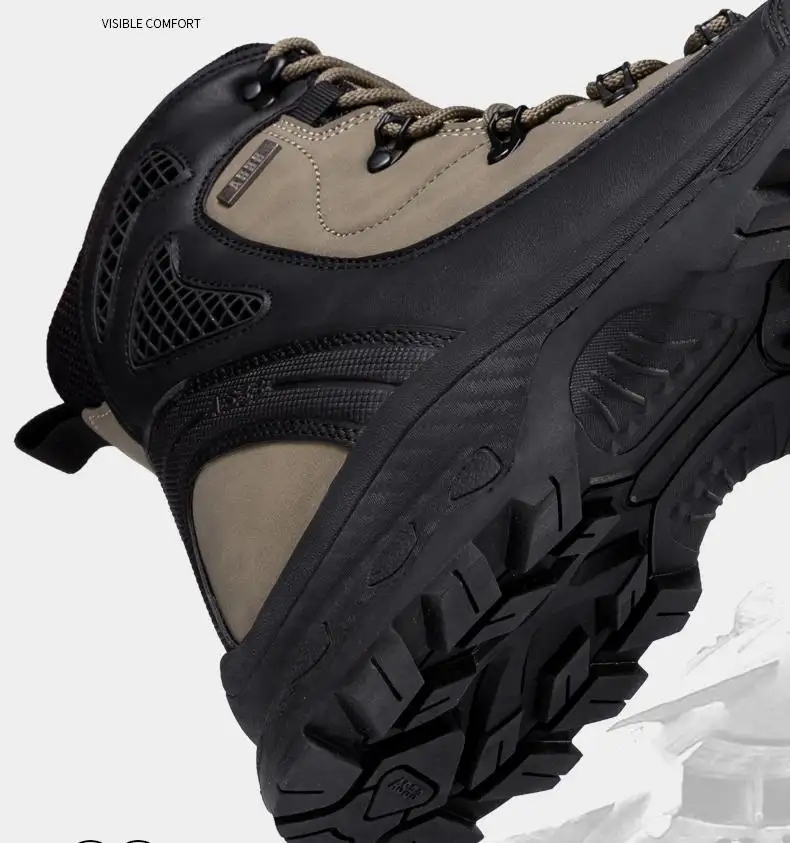
Mountain terrain places a premium on stable contact with uneven ground. Loose stones, changing slopes, and irregular paths can expose weaknesses in outsole traction and ankle support. For this use case, the 07 Combat Boots provide a relevant construction example.
This model uses a non-slip rubber outsole described for all-terrain grip. The high-top design adds ankle support, while the microfiber upper is lightweight and wear-resistant. At 0.8 kg per pair, the model also addresses a practical concern for prolonged movement: unnecessary footwear mass can contribute to fatigue over distance. The breathable lining supports moisture management during active use.
For buyers comparing tactical combat boots for mountain routes, this combination matters because each component serves a different purpose. The rubber outsole addresses ground contact, the high-top structure supports the ankle area, and the cushioning midsole helps manage repeated loading during long walks. We do not treat “mountain suitable” as a single feature; it is the interaction of these elements that makes the specification relevant.
Why Do Urban Missions Need Cushioning and Fast Access?
The model uses a lightweight EVA midsole for shock absorption and pressure relief, combined with a non-slip, wear-resistant rubber outsole. Its mesh plus PU upper supports breathability and durability, while the high-top construction provides ankle support. A side zipper allows quicker on and off, which can be useful where footwear changes or repeated deployment routines are part of the working environment.
These features explain why the term running combat boots should not be interpreted as ordinary athletic footwear. Mission-oriented running combat boots still need outsole durability, upper protection, and structured support. The A533-309 model weighs 1.2 kg per pair and is available in sizes 39–46. It is also specified as waterproof in our product data, making it relevant when urban routes include rain or wet ground.
How Should Boots Perform on Sand and Loose Ground?
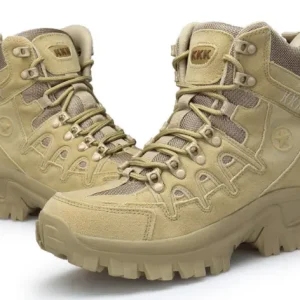
Flying Boots use a mid-top design and weigh 0.9 kg per pair. The model has a composite upper designed to combine protection and breathability, together with a non-slip, wear-resistant rubber outsole. Its breathable lining helps keep feet dry during extended activity. Available colors include khaki, black, and green, with khaki particularly relevant to desert and urban settings in the product information.
For sand and mixed outdoor routes, the main value is not a claim that one outsole can eliminate every loose-ground risk. The practical advantage is the combination of mid-top flexibility, rubber outsole grip, wear resistance, and lower weight than many heavier constructions. Buyers sourcing special forces boots for warm, mobile operations should examine this balance carefully.
What Matters Most on Wet and Slippery Ground?
Wet terrain requires precise product selection because not every tactical boot in a range is specified as waterproof. Buyers should avoid assuming that a rugged appearance automatically means moisture protection.
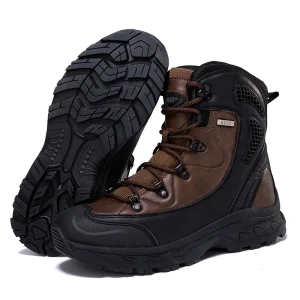
VW Hiking Boots are the clearest match in our selected group for wet outdoor use. The product uses a waterproof fabric design, with cotton fabric and Oxford cloth listed for the upper materials. Its TPU outsole has a gear sole texture intended to strengthen the anti-slip effect. The model is low-top, weighs 1 kg per pair, and covers sizes 39–46.
This construction highlights an important procurement point. Tactical combat boots for wet environments should be assessed through confirmed product specifications. Waterproof construction, outsole texture, material choice, and boot height should be checked separately. A low-top boot may support freer ankle movement, while a high-top design may be preferred where greater ankle coverage is required.
Conclusion
Mixed-terrain performance depends on matching construction to the actual route. Mountain movement calls for grip and ankle support. Urban operations increase the value of cushioning and practical access. Sand favors a careful balance between flexibility, weight, and wear resistance. Wet ground requires confirmed moisture protection and suitable outsole construction.
For professional buyers, tactical combat boots should therefore be evaluated as a system of materials and structural choices. Rubber outsoles, EVA cushioning, waterproof fabric, breathable uppers, wear resistance, and boot height each solve a different problem. At Jingming Trading, we support buyers in comparing mission requirements with available boot specifications, sample confirmation, and bulk procurement needs. Contact us with your terrain profile, required sizes, quantity, and application so we can discuss a suitable configuration.
FAQ
Are tactical combat boots waterproof for wet terrain?
Not all tactical combat boots should be assumed to be waterproof. In our selected range, A533-309 Boots are specified with waterproof features, while VW Hiking Boots use a waterproof fabric design. Buyers should verify each model separately because outsole grip, waterproof construction, and boot height are independent specification points.
Which tactical combat boots are suitable for mountain terrain?
For mountain and uneven terrain, tactical combat boots should prioritize traction and ankle support. The 07 Combat Boots are a relevant option because they use a non-slip rubber outsole with all-terrain grip, a high-top design for ankle support, a lightweight cushioning midsole, and a breathable lining.
Can running combat boots be used for urban missions?
Running combat boots can support urban movement when they retain mission-oriented features rather than copying ordinary running shoes. A533-309 Boots combine an EVA midsole for shock absorption and pressure relief with a non-slip, wear-resistant rubber outsole, breathable mesh plus PU upper, high-top support, and a side zipper.



