
A useful field setup is not a pile of tactical-looking items. Outdoor and security teams need clothing, footwear, load-carrying gear, and storage that work together over a shift, move safely through the expected environment, and remain straightforward to issue, adjust, and inspect.
Operating Context Sets the Gear List
The first decision is what the team must do while wearing the equipment. Patrol work, site security, outdoor training, and long walking routes put different pressure on movement, storage access, weather protection, and comfort, so the setup should begin with the task instead of a fixed list of accessories.
Core Items and Optional Items
A core issue normally covers uniform layers, boots, a load-carrying option, and a way to carry personal or team items. Optional additions should earn their place by solving a specific access, climate, identification, or storage problem; otherwise they add weight and complicate issue control.
The duty profile should also define what the team must be able to do while wearing the complete issue. Walking, sitting in a vehicle, climbing steps, reaching a radio or first-aid item, and removing a wet outer layer are simple tests that expose poor compatibility before a larger order is finalized.
For teams using a bdu kit, the clothing layer can be specified around fabric, size range, pocket layout, and reinforcement points. Jingming Trading’s stocked BDU-style set uses a 65% polyester and 35% cotton construction with breathable and tear-resistant positioning, which gives buyers a concrete baseline for matching the uniform to the rest of the issue.

The Setup Should Move as One System
Compatibility is what turns separate products into a reliable issue plan. The uniform should allow access to the vest and belt area, the footwear should suit the walking and terrain demands, and the pack should carry bulk items without blocking the movements or attachment points needed during the shift.
Load Carrying Without Unnecessary Bulk
A security vest setup should be configured around the items that must be reached quickly, not around every accessory available. Jingming Trading’s quick-wear tactical vest has a modular format, a one-pull donning system, breathable cotton mesh lining, and accessory mounting holes; buyers can use that information to define a practical configuration rather than ordering a generic appearance.
| System area | Decision to make | Product evidence to confirm |
| Uniform layer | Climate, range of movement, identification placement | Fabric, size range, pocket and closure layout |
| Footwear | Walking distance, terrain, ankle coverage, drying needs | Upper, outsole, lining, weight, closure method |
| Load carrying | Quick-access items and adjustment range | Modular panels, closures, webbing, lining |
| Pack storage | Water, documents, personal items, spare layers | Capacity, compartment layout, back padding, fabric |
Footwear and Storage Complete the Working Load
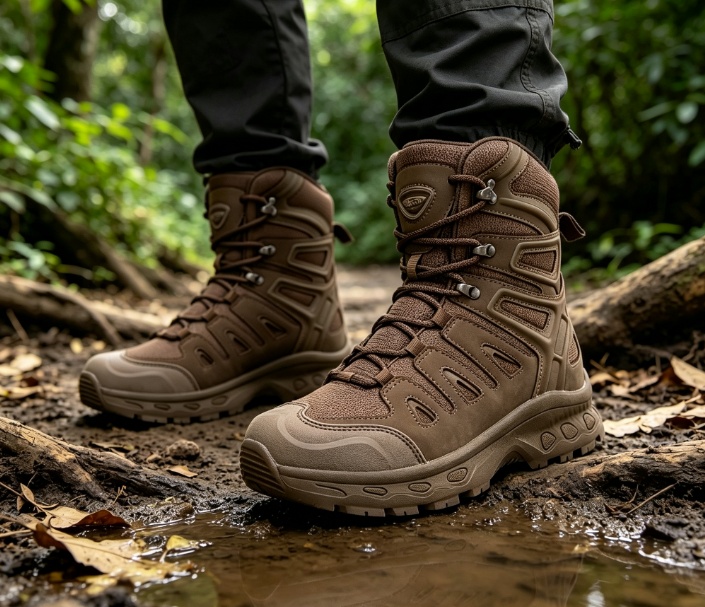
Footwear and storage often decide whether a setup remains usable after several hours. A533-309 boots use an EVA midsole, rubber outsole, mesh and PU upper, high-top ankle coverage, a side zipper, and polyester lining; those details should be compared against actual movement and weather needs rather than treated as universal preferences.
For carry capacity, Jingming Trading’s 807 mountaineering backpack is a 45 L, 800D Oxford option with a padded back, multiple compartments, hidden pockets, and expandable side webbing. That larger storage role is different from a vest’s quick-access role, so the two should be assigned to different parts of the workflow.
Storage decisions should reflect the shift rather than the maximum possible load. Water, spare clothing, documents, and low-frequency tools can stay in the pack, while only the items needed during immediate movement should occupy the vest or belt area.
- Place frequently used items where the wearer can reach them without removing the pack.
- Use the pack for bulk, weather, or shift-support items rather than overloading the vest.
- Check that boot height and lacing or zipper access suit the team’s movement pattern.
- Issue the setup in a consistent order so adjustments and inspections remain simple.

Configuration Matters More Than a Generic “Tactical” Look
A complete security forces vest setup should show how each item supports the team’s work: what is worn, what is carried close, what goes into the pack, and what can be removed when the task changes. This keeps the configuration practical for professional field use without turning the issue into an overloaded display of gear.
Before bulk supply, have a representative wearer try the complete system while walking, bending, sitting, and accessing the items that matter. That short trial reveals interference between layers, awkward load placement, and unnecessary accessories much earlier than a product-by-product review.
The trial should be recorded as a short configuration note rather than treated as an informal impression. Mark the adjustment range, the items assigned to each position, and any change needed for different body sizes or roles; those notes make later replenishment more consistent.
Summary
A practical tactical gear setup starts with the duty context, then assigns each item a clear role. Build the uniform, footwear, vest, and pack into one issue plan; keep fast-access and bulk-storage functions separate; and test the combination with the people who will use it. The result is a clearer wholesale specification and a more manageable field issue.
FAQ
What should a basic outdoor security gear setup include?
A basic setup commonly includes appropriate clothing, boots, a load-carrying option, and a storage solution. The exact contents should follow the duties, climate, walking distance, and issued tools.
Should all equipment be attached to a tactical vest?
No. Keep only quick-access, job-relevant items on the vest. Use a backpack or other storage for bulk items, spare layers, water, and equipment that is not needed every minute.
How do buyers avoid an overbuilt gear configuration?
List the tasks, map each item to a real use case, and remove accessories with no clear role. A representative wear trial is the fastest way to expose excess weight and interference.
Why should footwear be considered with the rest of the setup?
Footwear affects walking comfort, movement, and fatigue, while the rest of the setup affects carried load. The combination should be assessed together during a realistic field trial.
Can a tactical setup be adapted for different team roles?
Yes. Keep the core system consistent, then add only role-specific storage, identification, or climate items. This preserves issue control while allowing practical adjustment for the assignment.