

Introduction to Military Camouflage Uniforms
In the field of current battles and practical tasks, the camouflage uniform serves as much more than basic clothing. It functions as a smart tool made for staying alive. At Guangzhou Jingming Trading Co., Ltd., we grasped this need right from our start in 2013. We combined forward-thinking creation, making, and selling to help with worldwide safety demands. Camouflage uniforms allow personnel to blend into their surroundings, breaking up the human silhouette that the eye naturally detects. As a result, it gives a key moment’s edge in the work zone.
As buying for global safety grows tougher, the call for top-notch military camouflage patterns rises. These patterns work well in varied spots, from thick woods to dry sands. Our factory covers over 6,800 square meters. It has a focused team of more than 200 making experts. We make sure each army uniform pattern we create hits the strict rules of today’s forces.
What Is a Camouflage Uniform?
A camouflage uniform is a special outfit built to make the user harder to see by people or machines. This happens through using different shades and designs that copy the feel and colors of a certain place. The main goal is “crypsis.” That means the skill of a living thing to dodge being spotted.
In a skilled practical setting, a current army uniform pattern includes a few main parts. It has to handle sight spotting while giving useful help. Our goods, like the BDU camouflage uniform set, use a T65/C35 fabric mix (65% polyester and 35% cotton). This keeps the outfit airy and strong against rips. This mix of fabric know-how and design choice sets what makes a pro-level practical outfit.
The Evolution of Military Camouflage Patterns
The story of military camouflage patterns shifted from showy “bright colors” in the 1800s. Those aimed to lift spirits and mark groups through fog. Now, it reaches smart digital styles in the 2000s. Early ideas stuck to plain olive greens and khakis. But the change to tricky multi-area designs sped up with the rise of sky watching and better lenses.
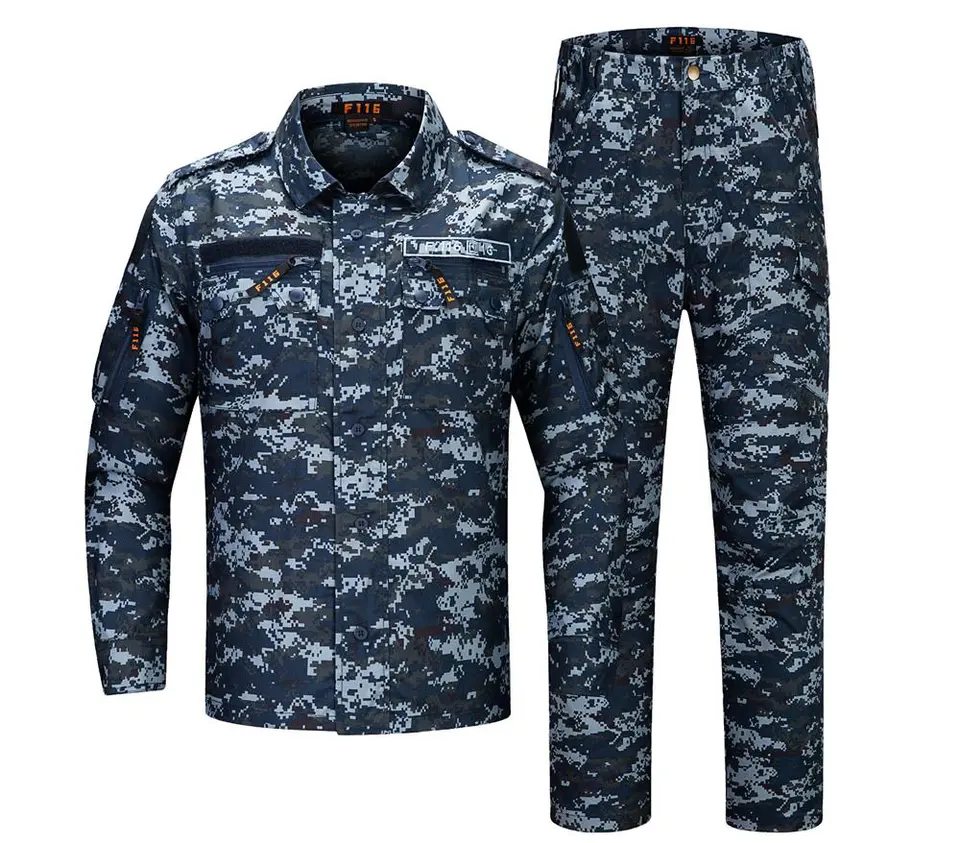
Today’s battles ask that an army uniform pattern fit the shifting tech of the fight area. We noticed a big move to digital hiding. It uses tiny “pixels” of shade to split the person’s outline better than old natural forms. This change shows in our wide range of goods. We run our own factories there. So, the worth of these detailed patterns stays steady and under control.
Common Types of Military Camouflage Patterns
Various work areas need exact sight marks. Choosing the wrong camouflage pattern can significantly increase the risk of detection in operational environments.
Woodland Camouflage Patterns
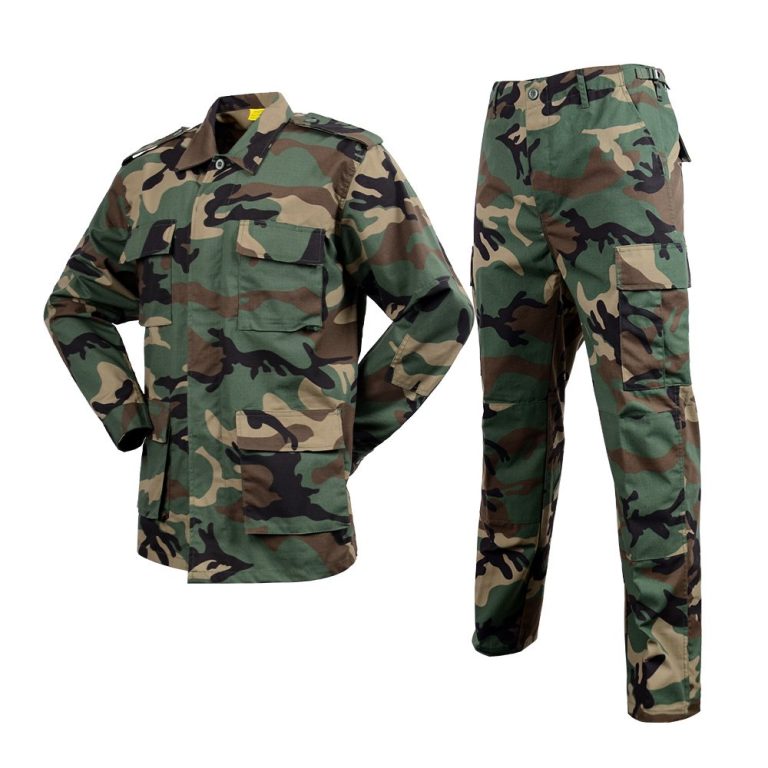
Made for tree and bush areas, these designs often use dark greens, browns, and blacks. Our F1 French Military Uniform stands as a clear case of a plan tuned for such spots. It has top-quality mixed fabrics that resist wear and let air through.
Desert Camouflage Patterns
In dry areas, sand colors and pale tans prove key. These designs copy the sharp shade and light plays of the sand land. We send many African and Middle East forces with designs fit just for these rough, sun-hit grounds.
Urban and Digital Camouflage
City tasks need grays and soft tones to fit with stone and metal builds. At the same time, digital hiding, found in many modern American camo patterns, uses math rules to make a “noise” that mixes up the eye’s sense of depth.
American Camo Patterns and Their Global Influence
The United States stayed a top name in practical cloth growth for a long time. American camo patterns such as the M81 Woodland, the Universal Camouflage Pattern (UCP), and the very useful MultiCam set the mark for world rules.
The reach of an army uniform pattern grown in the U.S. often goes way past its lines. Many of the practical vests and carry bags we make, like our 1000D Nylon modular vests, are built to match these known world designs. This meets the wants of the global buying staff. The flexible side of U.S.-based plans led to their use by different safety groups and private workers around the globe.
Army Uniform Patterns Used Around the World
Various places grew their own styles based on their exact land and fighting techniques.
| Region | Common Features | Typical Material/Weight |
| Europe | Large-shape patterns (e.g., French F1, German Flecktarn) | 215-220 g/m² |
| Middle East | High-contrast desert tans and khakis | T65/C35 Breathable |
| Africa | Diverse patterns for savannah and jungle; heavy reliance on durable ripstop | 215-220 g/m² |
| North America | Digital and multi-terrain focus (MultiCam, MARPAT) | High-denier Nylon/Cotton blends |
Our firm, based in Guangzhou, China, set up lasting and firm team links with many African rulers and forces. We give them the right army uniform pattern groups they need to do well in their home spots.
Key Materials and Features of Modern Camouflage Uniforms
A camouflage uniform has to work under hard body strain. At Jingming Trading, we put first place on strong fabrics. Most of our outfit groups, including the 2G and G9 Frog Suits, use a 65% polyester and 35% cotton mix.
Fabric Weight: Most of our practical groups keep a load of 215–220 grams per square meter. This gives a fair mix between lasting power and ease of movement.
Special Features: Our forward outfits do not just cover shade. They fight static, block UV, slow flames, and hold against rips.
Functional Design: For one, the G9 Frog Suit has EVA pads on the arms and knees. It adds thick elbows to fight wear. Plus, it offers many pockets on both shoulders.
Weather Resistance: Our bomber and M65 jackets give a water block rate of 1500MM. This helps stand against the wind and showers.
Applications of Camouflage Uniforms Beyond the Military
Though made for the fight field, the camouflage uniform found big use in other fields.
- Law Enforcement: Police and guard teams use practical designs for special tasks and crowd handling. We send safety tools like the FAST Wendy fiberglass riot helmet for these high-risk spots.
- Outdoor Activities: The demand for good military camouflage patterns grows in home use for hunting, airsoft games, and stay-alive practice.
- Security Procurement: We focus on giving OEM/ODM help for practical and guard goods. This makes sure even non-army groups get pro-level tools.
How to Choose the Right Military Camouflage Uniform for Procurement
When picking a camouflage uniform for large-scale buying, a few things need checking to make sure the task wins:
- Terrain Matching: Look at the main work area. Is it tree land, sand land, or mixed ground?
- Fabric Durability: For strong use, fabrics must withstand rips. Our 800D Oxford cloth in carry bags and 1000D Nylon in vests ensure long life.
- Manufacturer Reliability: It matters to team with a “source factory” that gives all-in-one buying to cut time and work. We keep a 5,300 square meter store with over 100,000 items in quick stock to promise firm sends.
Customization and OEM Options for Military Camouflage Uniforms
At Jingming Trading, we take pride in being a full field and sell firm. This lets us give wide fitting choices:
OEM/ODM Services: We can make outfits based on the samples you send.
Customization: From berets with fit designs to police hats with exact Velcro or button ties for signs, we meet special group wants.
Small Batch & Bulk: While we manage yearly loads of almost twenty million groups, we also back 7-day sample orders. This makes sure our buyers feel good before making a big purchase.
Conclusion
Picking the right army uniform pattern is a key choice that affects the safety and productivity of workers. Whether you seek old military camouflage patterns or new American camo patterns, knowing the fabric facts and place fit proves key.
Jingming Trading sticks to our rule of “quality first, reputation first, fair price, customer first.” With our smart lead way and making tech, we stand ready to act as your lasting team in buying practical tools.
Frequently Asked Questions
How do you ensure the quality of your camouflage uniforms?
We keep tight quality checks throughout the production steps. We always make samples for the buyer before big production starts. Also, an end check happens before each send. To provide further peace of mind, we are happy to take videos and pictures of samples or finished products for your confirmation.
What is the lead time for sample orders and bulk production?
We back a 7-day sample order send time for most of our goods, including military uniforms, boots, and backpacks. For large orders, our huge production power of almost twenty million groups per year ensures we can handle big orders and force needs well.
Can you customize uniforms with specific logos or patterns?
Yes, we focus on giving OEM/ODM help. You can send a sample, and we will make it for you. Many of our goods, such as the Bomber Jacket and 511 Baseball Cap, have Velcro spots made just for a free sign add. Or they use digital print and sewn signs.
What are the accepted payment and delivery terms for international orders?
We mainly work on EXW (Ex Works) send terms. We take payments in USD, EUR, and RMB through T/T (Telegraphic Transfer). Our usual step has a 30% down payment to set up packing. The rest pays after you okay the done goods through photos or videos.
What materials are best for breathable yet durable tactical uniforms?
For most places, we suggest our T65/C35 mix, which has 65% polyester and 35% cotton. This pair gives the “tear-resistant” lasting of polyester with the “breathable” ease of cotton. For special wants, we also give 100% pure cotton picks and high-count 1000D Nylon for tools that need top rub hold.



