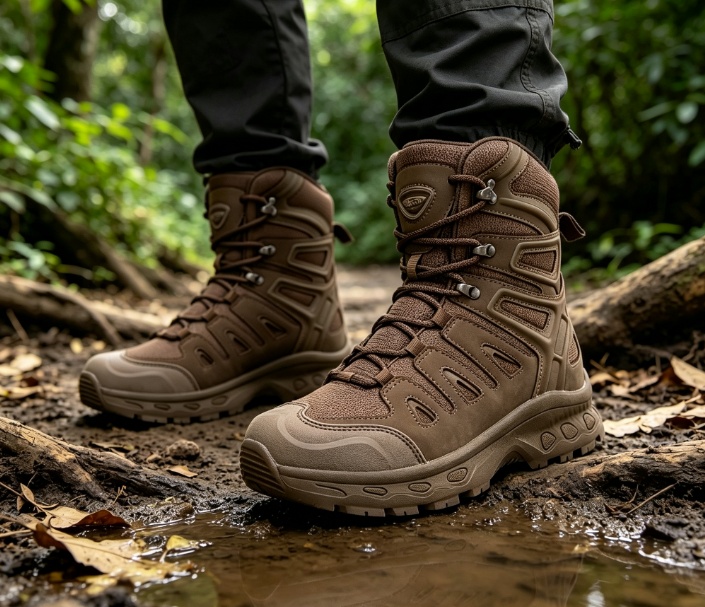

Understanding the Purpose Behind Tactical and Hiking Boots
The choice between a tactical boot vs hiking boot hinges mainly on job needs, work spots, and danger levels. Tactical boots suit police workers, safety staff, and army personnel. These people work in spots that change fast and hold real dangers. Such boots stress firm build, hit safety, and speedy action skills.
Hiking boots, on the other hand, fit long-distance travel in wild areas. They put comfort, air flow, and bend first. This cuts tiredness during long steps or path walks. Both kinds of shoes help with busy tasks. But their building ideas differ a lot.
In real job cases, the tactical boot vs hiking boot chat focuses on how each shoe helps steps under pressure. Tactical boots work best for quick turns, weight carry, and city risks. Hiking boots aid steady front moves over bumpy land. There, safety from hits or junk matters less.
Key Differences Between Tactical Boots and Hiking Boots
Material Composition and Construction Features
Fabric choice shapes how shoes work. Tactical boots often pick strong uppers, abrasion-resistant cloths, and puncture-proof bottoms. These picks stand up to daily touch with cement, junk, chemicals, and many hits. For example, the M16 Boots have a light fiber upper. It fights rips and face harm. This makes them good for strong job work.
Hiking boots mostly stress air and wet control. Net parts and water-block films show up a lot. They let air pass but stop water entry. Yet, this aim for a nice feel often cuts scrape fight and press hold. That happens when you stack them against tactical shoes.
From a job shoe view, the hiking boots vs military boots match shows a big swap. Hiking boots may not seem as heavy and more bendy. But tactical boots aim for lasting power and safety in normal work days.

Evaluating Support Needs During Duty or Mission
Ankle and Arch Support Comparison
Foot hold counts a lot in work spots. Tactical boots often show taller sides. These keep the foot steady in quick side steps, stair climbs, or bumpy city floors. Types like the 07 Combat Boots use a high build. It cuts the chance of foot twists in chases or group watch jobs.
Hiking boots usually give fair foot support plus better arch padding. This setup aids faraway steps. But it may not take sudden steps or fast turns to shift well. In long watch cases, weak foot steadiness can raise tiredness or injury.
Choosing the best law enforcement boots often rests on whether the job calls for quick help in tight city areas. Or if it needs steady moves over wild land.
Load-Bearing Capabilities Under Operational Conditions
Job shoes must hold body weight plus carried stuff. Police and army people often wear bodyguards, talk tools, and help with gear. Tactical boots like the Flying Boots keep their firm shape under these weights. They do this with strong middle parts and lasting bottoms.
Hiking boots do not aim for repeated heavy-weight hold on firm floors. Softer middle parts may squash faster under steady weight. This cuts long-run help. Such a split sits at the heart of the tactical boot vs hiking boot pick for work jobs.
Terrain Adaptability: Urban vs Wilderness Environments
Performance in Urban Duty Settings
City work spots bring steady floor shifts. These include wet roads, flat cement, loose stones, and room floors. Tactical boots do fine in these spots. They owe this to no-slide rubber bottoms and steady foot builds. Storm Boots, for one, mix no-slide bottom mixes with air-pass inside layers. These handle wet in many rooms and outside switches.
Plain color looks and low shine ends also fit tactical boots for quiet police work. These parts help put them in the best law enforcement boots group for city jobs.
Suitability for Outdoor Missions or Remote Patrols
In wild watches or farm tasks, bend and grab on wild floors grow key. Hiking boots are right for bumpy land like dirt ways, rock hills, and wood paths. Their step marks and air-pass uppers back long-way moves in outside spots.
Some half-high tactical types, like Tiger Wolf Boots, give a mixed way. They join hiking-style bend with tactical lasting power. This fits them for mixed-land work where city and outside spots mix.
Durability and Longevity Under Repetitive Use
Wear Resistance Over Time in Demanding Roles
Tactical boots grow for daily repeat use. Strong uppers and thick bottoms fight wear from cement, chemicals, and pointy junk in city spots. This lasting power lets them keep working for long periods of time.
Hiking boots do well in the wild in general. But they may see fast wear on hard city floors. Softer bottom mixes can break down quickly in long asphalt or cement use. This makes them less fit for steady work tasks.
From a green view, longer-hold tactical boots cut swap times and stuff use. This backs smart buy ways and ESG-focused supply chain goals.

Maintenance Requirements and Lifespan Expectations
Tactical boots aim for easy care. Many types let simple, clean, fast dry, and middle part swaps. Fabrics are picked to cut water take and keep form after many uses. For one, the A533-309 Boots show an air-pass net with a lasting upper and side pull build. This aids quick put-on and plain care.
Hiking boots may need more cleaning times to keep the air-pass net strong. While they often skip skin care needs, their full life in city work stays shorter than tactical picks.
Comfort Considerations During Long Shifts or Patrols
Breathability and Temperature Regulation Features
A good air pass proves key in long work times. Tactical boots add air-pass linings and wet control setups. These cut heat builds up in long wear. Flying Boots use the inside air paths. They help keep feet dry through long work hours.
Hiking boots stress light net builds to boost air in long outside steps. This setup shines in warm spots. But it may give less safety in places with junk or chemical touch.
Cushioning Systems That Reduce Fatigue
Nice feel in work rests on the hit handle as much as soft touch. Tactical boots aim at shock, take to spread, push in, and repeat foot hits on firm floors. M16 Boots use light, padded middle parts. These cut tired