

Soldiers’ skill in hiding themselves remains a key factor for gaining an edge in battle. The aim might be to dodge enemy troops or catch them off guard. In either case, staying hidden plays a vital role in warfare. Early efforts at disguise, like changing facial hair, offered little success. Yet, the rise of today’s camouflage has changed the way fights happen. Now, camouflage involves clever designs with patterns and shades. These help make people and gear harder for foes to spot.
Today’s military camouflage works well because it draws from proven ideas in science. Deception has been around for thousands of years. However, the past hundred years brought big advances in physics and how the body works. These changes let experts create many army camo patterns and different camo colors suited to certain places. In the military camouflage uniform market, success goes beyond just blending in visually. It also means beating high-tech tools that detect threats.
What is Military Camouflage?
Military camouflage covers any fabric or method that armed groups use to make spotting tough or impossible in action. It marks a move from natural hiding spots to human-made options that handle multiple light types. Unlike gear for everyday or fun use, pro-level items must counter various ways of detection across light waves.
In factories, a camouflage uniform starts in special cloth-making plants. Advanced military camouflage patterns often get printed via screens or heat-transferred onto tough materials. Then, the clothes take shape. This way, army uniform patterns hold up and work well even in rough outdoor settings. Guangzhou Jingming Trading Co., Ltd., started in 2013, uses these top production methods to meet needs worldwide. We provide plenty of output for forces around the globe.
The Strategy of Military Deception (MILDEC)
In expert settings, camouflage goes by the name MILDEC. That stands for “military deception.” It shows that camouflage is more than just gear. Instead, it acts as a smart tool to win advantages. It fills three main goals in tactics.
- Concealment: Hiding a spot or gear from enemy watchers.
- Ambush: Staying out of sight long enough to launch a sudden strike.
- Infiltration: Sneaking by enemy lines without getting noticed.
The know-how of fooling others follows a few key rules that world armies use.
- Magruder’s Principle: It is generally easier to maintain a target’s pre-existing belief than to change it.
- Jones’ Dilemma: Deception becomes more difficult as the number of information channels increases, yet controlled channels increase the likelihood of the deception being believed.
- Windfall Avoidance: Deceptive intelligence is less likely to be believed if it is perceived as too easy to obtain.
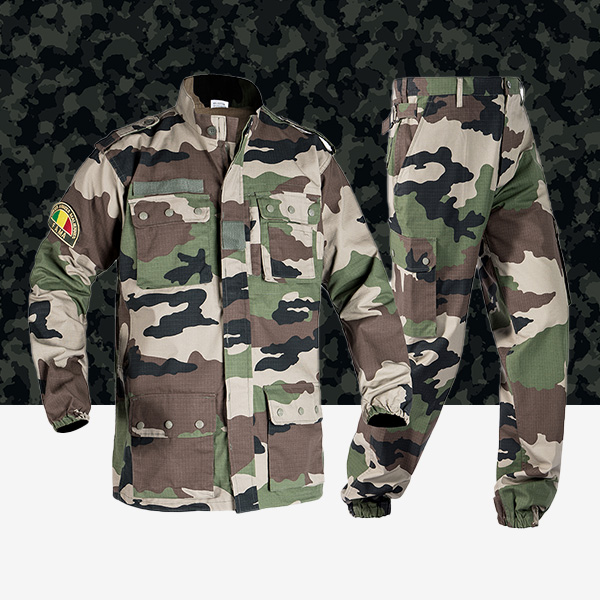
The Science Behind Visual Camouflage
Visual camouflage plays with how the human body and mind work. People naturally pick out forms, outlines, and motion. Designers use various camo patterns to mess with these instincts. The light humans see is limited, from 0.4 to 0.7 microns. Camouflage takes advantage of this by focusing on three main parts.
Environmental Mimicry
Environmental mimicry means using flat shapes to copy the real depth of the area around. For example, if a soldier stands near a tree, the military camo types on them should include forms and tones that look like tree skin, limbs, and foliage from afar.
Colour Replication
Copying the right different camo colors is key, or mimicry won’t work. A woodland design needs mixes of greens, browns, and darks. Desert spots call for sandy and earthy tones. The types of camouflage patterns out there now fit closely to the exact shades of the place where action happens.
Eye-Brain Signal Interference
This part is the “disruptive” side of camouflage. It breaks up the person’s outline. As a result, the mind can’t quickly label the shape as human. So, even if someone spots “something,” the mix of army camo types keeps them from seeing it as danger right away.
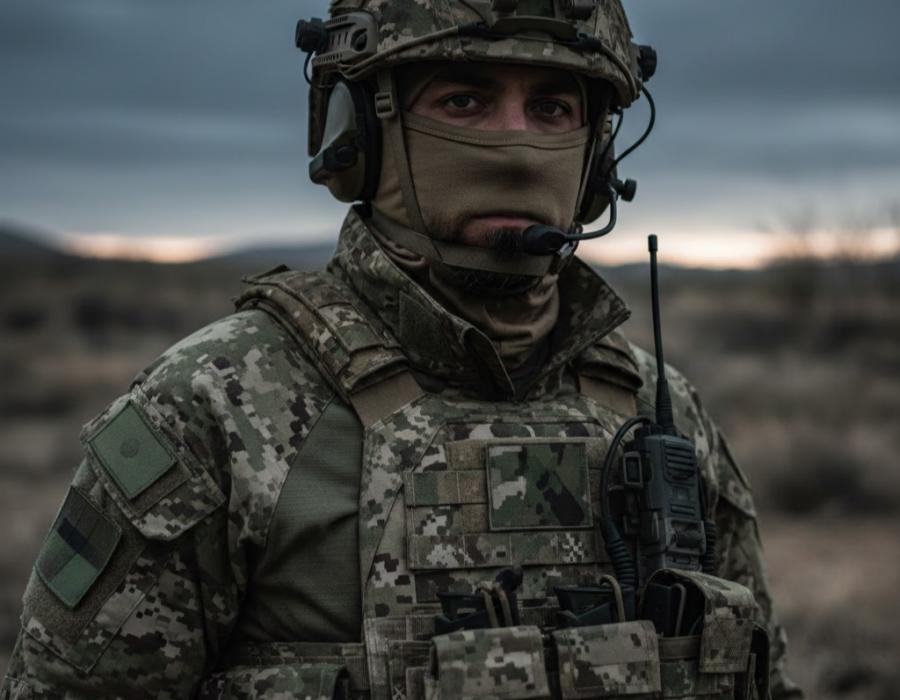
Evolution of Army Camo Patterns
The story of us camouflage patterns and American camo patterns reveals steady growth from plain olive green to detailed digital and natural looks. Old designs often had big patches of color. But current army camo patterns use tiny details to mix in up close. They also have larger elements for hiding from far off.
Well-known camo types include these.
- Disruptive Pattern Material (DPM): Focusing on high-contrast shapes.
- Digital/Pixelated Patterns: Using small squares to mimic the dappled light of nature and reduce the “edge” detection of the human eye.
- Multispectral Patterns: Designed to work across visible and near-infrared light.
In certain fields, like health workers or helpers in battle zones, even the camo scrub has gained use. This keeps all team members blending with the group’s style and needs on the ground.
Beyond the Visible: Non-Visual Detection
As tech for finding things gets better, just blending visually isn’t enough anymore. New devices can see past standard different camo by picking up light outside what eyes catch.
Near-Infrared (NIR) Spectrum Concealment
The near-infrared range, from 0.75 to 1.0 microns, stays hidden from plain sight. But night gear spots it easily. So, pro-military camouflage patterns need to meet NIR standards. That means the colors in the cloth bounce back infrared much like the nearby area does, such as green stuff in plants. This stops the soldier from glowing bright white in night views.
Thermal Concealment
The body gives off warmth, so heat detectors can find the 37°C mark of a person against a chillier setting. Fresh studies in the military camouflage uniform market aim at cloths that cut down or spread out heat from the body. This helps beat devices that image warmth.
Radar Concealment
Radar uses radio signals to find and follow people on the Earth. New work on camouflage uniform includes layers that cause microwaves to bounce back less from the cloth. This tech grows more important in spots watched by small radar units. Jingming keeps watch on these changes in tech. They make sure their making skills match the demands of today’s multi-light battles.
Conclusion
Today’s military clothing seldom acts as a basic outfit. Rather, it serves as a tool shaped by science. Picking army camo patterns and fabrics involves careful steps. These follow the rules of physics and the needs of current fights. As detection tools advance, the field must keep creating new ideas. The next step heads to “smart camouflage” that shifts with the surroundings on the spot. By sticking to strong research and making standards, firms like Guangzhou Jingming Trading Co., Ltd. make sure troops get the best hiding tech out there.
FAQ
What is the black and grey camo called?
The black, grey, and white pattern is most commonly referred to as “Urban Camouflage.” It is designed for use in man-made environments such as cities, where shadows and concrete structures provide the primary backdrop.
Why are there so many different camo patterns?
There is no “universal” camouflage. Different camo is required because the geometry and color composition of a jungle, a desert, an urban center, and an arctic tundra are fundamentally different.
What is the difference between concealment and camouflage?
Concealment generally refers to the use of physical objects (like vegetation or tarps) to hide an asset’s shape. Camouflage refers to the use of colors and patterns on the asset itself to prevent detection while stationary or on the move.
Are all military uniforms NIR compliant?
No. Only high-specification tactical uniforms designed for combat operations are typically treated for NIR compliance. Standard fatigue uniforms may not have these properties.
B2B Partnership and Procurement
For government offices, defense builders, and big sellers, choosing a steady maker partner matters a lot for keeping forces ready. Guangzhou Jingming Trading Co., Ltd. keeps a huge stock of more than 100,000 ready items. Their 6,800-square-meter site can manage large runs for buyers everywhere. Their skills cover from battle shoes to top multi-light outfits. This guarantees steady quality that teams can count on for each delivery.
If your group needs reliable lines for strong tactical items or custom hiding fixes, we welcome talks with our expert crew.
Contact Guangzhou Jingming Trading Co., Ltd. today to discuss your procurement needs and explore our comprehensive product catalog at https://www.jingmingarmy.com/.



