

In demanding settings of army missions, police duties, and expert guard work, setting up personal safety items goes beyond personal choice. It serves as a key element for task outcomes and staying alive. Guangzhou Jingming Trading Co., Ltd. stands as a leading combined maker and seller in Guangzhou. The company has built its name since 2013. It excels in creating and making tactical gear. We operate a large 6,800 square meter plant with more than 200 staff members. We supply a full lineup of equipment. This includes pattern clothing, strong bulletproof vests, and tactical shoes. This guide explores in detail the expert setup of tactical setups. It combines standard practices with our broad production skills.
Fundamentals of Tactical Vest and Plate Carrier Integration
The base of every expert loadout starts by selecting between a basic tactical vest and a special plate carrier. Folks often swap the terms around. Yet their functions vary quite a bit. A standard tactical vest setup suits carrying loads well. It holds bullets, radios, and aid kits. In comparison, a plate carrier setup fits hard armor panels to shield the main body parts from speedy gunshots.
At Jingming Trading, our Quick-wear Tactical Vest uses 1000D Nylon for solid tear strength and easy adjustments. A pro plate carrier set up calls for a good mix of safety and ease of movement. Our styles include inside covers that unzip just for bulletproof panels. This setup helps the wearer shift from simple carry tasks to serious danger armor duties smoothly.
Advanced Tactical Vest Setup for Law Enforcement and SWAT
For local safety, needs for a tactical vest setup police or a duty vest setup put strong emphasis on fast reach to mild tools, cuffs, and radio signals. Police workers usually need an open front zone. This way, they can raise a long firearm or switch to a pistol without hurdles.
On the other hand, a SWAT vest setup demands a tougher tac vest loadout. SWAT units often face bigger risks. Thus, their vests tend to be adaptable. They support adding unique items like stun bags, break-in tools, and sturdy water carriers. Jingming’s adaptable styles permit simple joining of parts. This feature matters a lot for unique teams. They adjust their equipment for each job.
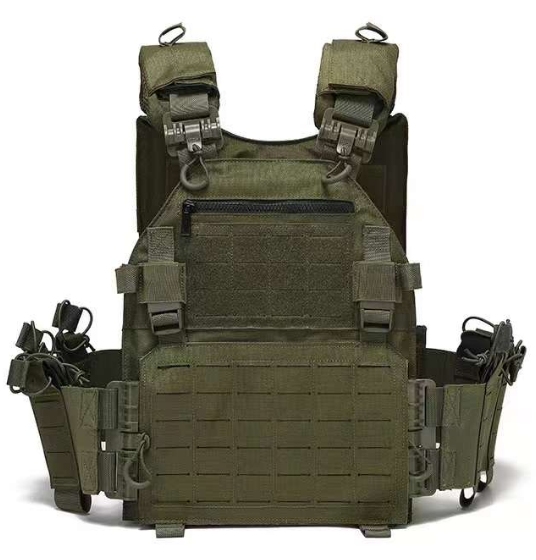
Law Enforcement vs. Military Loadout Requirements
| Feature | Police Duty Vest | Military/SWAT Plate Carrier |
| Primary Goal | Equipment Accessibility | Ballistic Protection & Endurance |
| Typical Material | 600D – 1000D Nylon | 1000D Reinforced Nylon |
| Pouch Priority | Handcuffs, Radio, OC Spray | Magazines, IFAK, Hydration |
| Armor Level | Level II or IIIA (Soft) | Level III or IV (Hard Plates) |
| Modularity | Moderate (Fixed/MOLLE) | High (Full MOLLE/Laser Cut) |
Military Configuration: Army and US Army Plate Carrier Standards
A military plate carrier setup or a clear US Army plate carrier setup follows the “Mission Essential Task List” (METL). The weight needs even spread to avoid lasting back harm. At the same time, it must keep fight-key items within quick reach.
A solid army plate carrier setup usually sticks to the “Rule of Three” for ammo holders: three in the front row, plus extras on the side band or belt rig. This forms a slim tactical vest loadout that lets troops lie flat without discomfort. Jingming’s tactical vests use airy cotton netting and extra-thick cushions. They provide ease for the extended use needed in army field tasks.
For folks seeking full guard, our “Full set of bulletproof vests” gives a cover area of 0.28-0.55 square meters. It has add-on parts like neck guards, arm cushions, and a bulletproof lower triangle panel.
Proper Placement: How to Wear a Plate Carrier
The success of armor protection relies fully on proper plate carrier placement. New users often make the error of positioning the carrier too far down.
- Vertical Alignment: To address how should a bulletproof vest fit, the upper edge of the front panel must align with the suprasternal notch (the “V” at your collarbone join). This guards the heart and main bloodlines.
- Side Alignment: The panels need centering on the body core. If the carrier moves into action, it might leave key areas open.
- Tightness: While figuring out how to wear a plate carrier, make it firm so it stays put during runs. Yet keep it relaxed enough for full breaths in action. Our quick-on and off design employs a single-pull method. It secures the fit while allowing fast removal in urgent cases.
Enhancing the Loadout: Tactical Boots and Accessories
No tac vest setup works fully without fitting shoes. The load from a packed vest—particularly as a tactical weight vest for practice—puts heavy strain on ankles and soles.
Jingming Trading offers various expert shoes, like the A533-309 Boots. These tall tactical boots have a light EVA inner sole for impact cushioning and a grip rubber base for rough ground hold. For speed needs, our shorter styles such as the “Tiger Wolf” or “Flying Boots” give bend and safety. They also cut tiredness on extended walks.
Also, adding a tactical backpack proves essential for long jobs. Our 45L big-space packs include improved thick back supports and 800D Oxford fabric. This makes them rip-proof and able to handle big weights from army treks and outings.
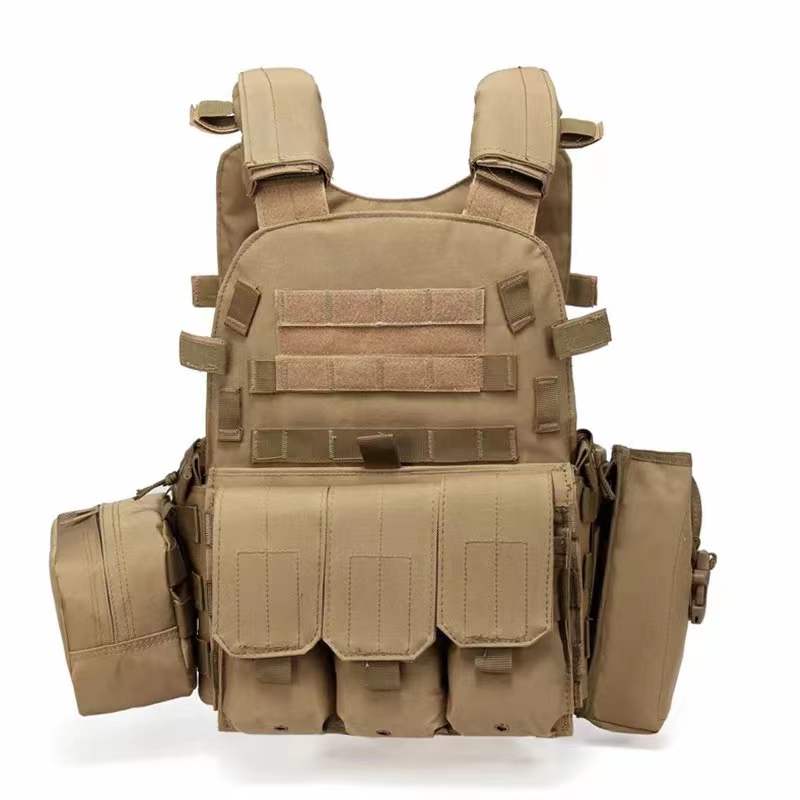
Beginner Guide to Tactical Weight Vest Training
For lots of regular folks and workout fans, tactical gear appeal starts with a beginner guide to tactical weight vest practice. Employing a plate carrier in fitness boosts heart strength and muscle staying power.
At the outset, keep the plate carrier loadout simple and light. Wearers ought to pick vests with air-permeable covers. For example, the netting in Jingming items helps avoid heat buildup. Focusing on proper plate carrier placement stays important in practice too. It prevents strain on the spine. As stamina grows, add-on parts or denser panels can join via the sewn Velcro and growth slots in top vests.
The Importance of Medical and Utility Integration
A full tactical vest setup requires a set medical (IFAK) part. Our M8 First Aid Kit suits quick crisis aid. It holds basics such as stop-bleed wraps, Israeli wraps, and brace sticks. In a pro tac vest loadout, place the aid kit where both hands can grab it.
For practical use, the Nine-piece Belt Set offers a backup gear line. Shifting ammo bags and tool sets to the belt cuts front bulk. Thus, it shapes a sleeker and better tactical form.
Conclusion
Guangzhou Jingming Trading Co., Ltd. sticks to the idea of “quality first”. If setting a US Army plate carrier setup for field work or a duty vest setup for police, our direct plant building and strict end checks make sure all gear holds steady and reliable. Grasping the details of how to wear a plate carrier and your job’s exact needs lets you form a loadout. It delivers top safety without cutting movement freedom.
FAQ: Solving Your Tactical Gear Challenges
How do I know if my plate carrier is positioned correctly for protection?
The front plate should start at your collarbone notch, and the back plate should be level with the front. It should cover from one side to the other to protect the heart and lungs. Always check your proper plate carrier placement in a mirror or with a partner.
Can I use a tactical vest for weight vest training?
Yes, but ensure it is a high-durability model like our 1000D Nylon Quick-wear vest. Standard fitness vests often lack the breathable mesh and thickened padding found in professional gear, which are essential for preventing skin abrasion during intense workouts.
What is the difference between a “Quick-wear” vest and a standard one?
A quick-wear vest, such as the Jingming model, features a one-pull quick-on and off design. This is vital for safety in maritime environments or during medical emergencies where the gear needs to be removed in seconds.
How should I maintain my tactical boots after a mission?
For boots like the A533-309 or cowhide models, remove dirt with a soft brush, air dry them away from direct heat, and ensure the breathable mesh remains clear of debris to maintain moisture-wicking properties.
Is the “one size fits all” design truly adjustable for different body types?
Most professional carriers use adjustable cummerbunds and shoulder straps. Jingming’s vests are designed to be “one size fits all” through modularity and adjustable Velcro systems, ensuring a snug fit for various torso sizes.



