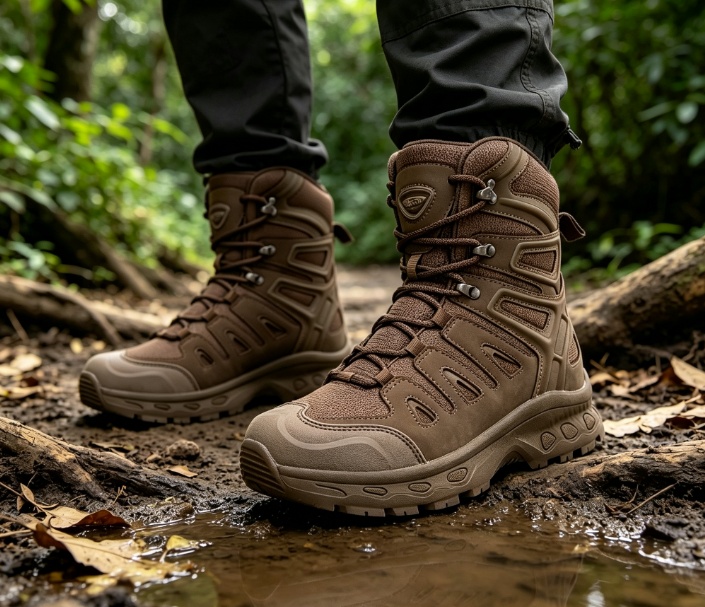

People no longer buy combat boots just for field training. By 2026, workers will also wear them for security jobs, outdoor retail, hiking, daily travel, and uniform supply programs. In these areas, comfort, looks, grip, and lasting value are extremely important. At Jingming Trading, we consider maintenance a vital part of product performance. A pair of combat boots remains dependable only when users clean and store the upper, outsole, lining, zipper, and midsole properly.
Why Does Combat Boot Maintenance Matter?
Combat boots constantly face mud, dust, heavy rain, extreme heat, long walking times, and frequent bending. These tough conditions impact much more than just outward appearance. Dirt easily settles deep into the outsole grooves. Moisture gets trapped inside the inner lining. Furthermore, improper drying methods ruin the shape of the upper. For wholesalers, security suppliers, outdoor shop owners, and uniform buyers, clear maintenance advice significantly lowers complaints after delivery. It also provides end users with a simple method to protect their footwear.
Manufacturers build good combat boots using highly functional materials. However, even the strongest materials require careful upkeep. A rubber outsole needs clear tread patterns to keep a strong grip. You must not treat cowhide, Oxford cloth, microfiber, mesh, PU, EVA, TPU, and polyester parts in the exact same manner. For instance, you should never cover a breathable fabric panel with thick polish. Meanwhile, a leather section might need gentle conditioning after washing. When buyers grasp this key difference, they can suggest the correct cleaning process instead of handing out one basic rule for every single pair.
What Types of Combat Boots Need Different Care?
Various types of combat boots demand specific maintenance focuses. High-top combat boots usually require extra care around the ankle collar, the lacing section, and the upper creases. This is because they cover a much larger portion of the foot and ankle. Mid-top combat boots need special attention around the flexible ankle zones, especially after long hikes or outdoor drills. Low-top tactical shoes dry much faster. Yet, the rugged outsole and waterproof fabric still require frequent washing after muddy trips.
| Boot Type | Main Models | Material | Size Range | Weight | Maintenance Focus |
| High-top combat boots | 07 Combat Boots, M16 Boots | Rubber, cowhide, Oxford cloth | 39-46 | 0.8kg per pair for 07; 0.75kg per pair for M16 | Ankle support area, rubber outsole, breathable lining |
| High-top tactical boots | A533-309 Boots | EVA, rubber, mesh, PU, polyester | 39-46 | 1.2kg per pair | Side zipper, EVA midsole, mesh and PU upper |
| Mid-top tactical boots | Tiger Wolf Boots, Flying Boots, Storm Boots | Rubber, cowhide, Oxford cloth | 39-46 | 1kg for Tiger Wolf; 0.9kg for Flying and Storm | Flexible collar, breathable lining, rubber outsole |
| Low-top tactical boots | VW Hiking Boots | TPU, cotton fabric, Oxford cloth | 39-46 | 1kg per pair | Waterproof fabric, gear sole texture, outsole cleaning |
You must also store the combat boots carefully to preserve their shape. A roomy internal space quickly loses its proper structure if you press the boots under heavy boxes. Storing them while wet causes similar damage. For bulk inventory, the warehouse must keep every pair standing upright. The area must remain completely dry and completely away from direct heat. This ensures the upper and sole never bend out of shape before final sale or distribution.
How Should Combat Boots Be Cleaned After Field Use?
You should wash combat boots in careful steps rather than soaking them completely at once. The very first step is always dry brushing. Brush away loose dirt from the bottom and top before applying any water. A soft brush works perfectly for microfiber, mesh, Oxford cloth, and PU sections. Meanwhile, you can use a stiffer brush on the tough rubber outsole. This method stops mud from smearing all over the upper. It also lowers the risk of water pushing dirt into the delicate sewing lines.
After dry brushing the surface, gently wipe the upper using a damp cloth and a mild soap. You must never soak cowhide sections. Too much water makes the leather surface stiff and brittle. You should wipe Oxford cloth and mesh panels very lightly. This prevents damage to their breathable design. For A533-309 Boots, you must clean the mesh and PU upper with extra caution. The factory designed this product specifically for comfort, airflow, and long life. You must also wipe the side zipper thoroughly. Trapped sand makes the metal zipper feel stuck and rough during daily zipping.

How Can Combat Boots Be Polished Without Damaging Materials?
Your polishing method must match the specific upper material. Combat boots featuring cowhide or smooth leather-like parts can take a very thin coat of polish. You should do this only after thorough washing and drying. Apply the polish very lightly. Let it sit for a moment. Then, brush or rub it gently. We strictly advise against thick polish layers. Heavy wax blocks the sewing lines, gathers extra dust, and makes the boot much harder to wash after the next trip.
You must never treat fabric, mesh, Oxford cloth, and PU sections like formal full-leather dress shoes. These modern materials provide vital breathability, reduced weight, and real outdoor usefulness. A simple damp cloth and light brushing work much better than thick wax. This rule is especially crucial for combat boots worn in hot climates, on long walking trails, or in varied outdoor settings where sweat control is vital.

Conclusion
Combat boots provide excellent value when smart product design meets careful daily upkeep. Proper washing protects both the upper fabric and the bottom sole. Light polishing keeps the appropriate leather sections looking professional. Slow drying protects the soft comfort and the original shape. Good storage keeps the bulk inventory in perfect condition before retail sale or team distribution. They directly create fewer returns, better user satisfaction, steady repeat orders, and highly confident bulk buying. When users maintain combat boots correctly, the shoes easily keep their anti-slip, breathable, wear-resistant, and tear-resistant qualities during real, tough work.
FAQ
How does Jingming Trading support combat boots buyers after sample confirmation?
Please contact Jingming Trading if you require combat boots samples, a bulk price list, clear product photos, detailed videos, or shipping help. Our normal order process includes confirming the product details and amounts, receiving the deposit, sorting the packing, sending final goods photos or videos for approval, collecting the balance, and handing the goods to the buyer’s shipping agent.
Are combat boots suitable for outdoor hiking and daily commuting?
Yes. Many combat boots in our current catalog are built specifically for military tasks, tactical drills, rough hiking, and normal daily travel. We describe mid-top options like the Tiger Wolf Boots, Flying Boots, and Storm Boots as perfect for military and police training, outdoor trails, and city commuting. This is because they perfectly blend airy uppers, slip-resistant rubber soles, and flexible mid-height ankle support.
What types of combat boots are easier to maintain?
Low-top combat boots are generally much easier to dry and wash. They simply have less fabric covering the foot. In contrast, high-top combat boots demand extra careful cleaning around the tall ankle support zones. Mid-top combat boots give a nice balance between safe protection and easy flexibility. The absolute easiest type to care for depends entirely on the exact material, the sole design, and how frequently the user walks through mud, heavy rain, and long trails.
What makes good combat boots last longer in storage?
Good combat boots survive much longer in storage when you keep them perfectly clean, totally dry, well-aired, and safe from heavy weight. Buyers must never box up wet boots. They must not put cardboard boxes on damp concrete floors. They must also never crush wide-fit boots under heavy warehouse stock. Correct storage directly protects the rubber outsole, the inner lining, the upper shape, the zipper movement, and the clean look before final sale or team issue.