

The growth of the military camouflage uniform market shows an ongoing struggle between the desire for broad usefulness and the need for service-specific recognition. For many years, the Battle Dress Uniform (BDU) served as the top choice for flexibility among all parts of the U.S. armed forces. Yet, the start of the 21st century led to a change toward tailored digital designs. The most famous of these is the Marine Pattern (MARPAT). By examining the move from the “one-size-fits-all” BDU to the carefully crafted MARPAT, we see how current tactical equipment has developed to handle various fighting areas.
The Era of the Battle Dress Uniform (BDU)
The military brought in the BDU during the early 1980s. It offered a combined method for battle clothing. The goal was to swap out the plain-colored outfits from the Vietnam time with a design that worked well in mild and warm settings.
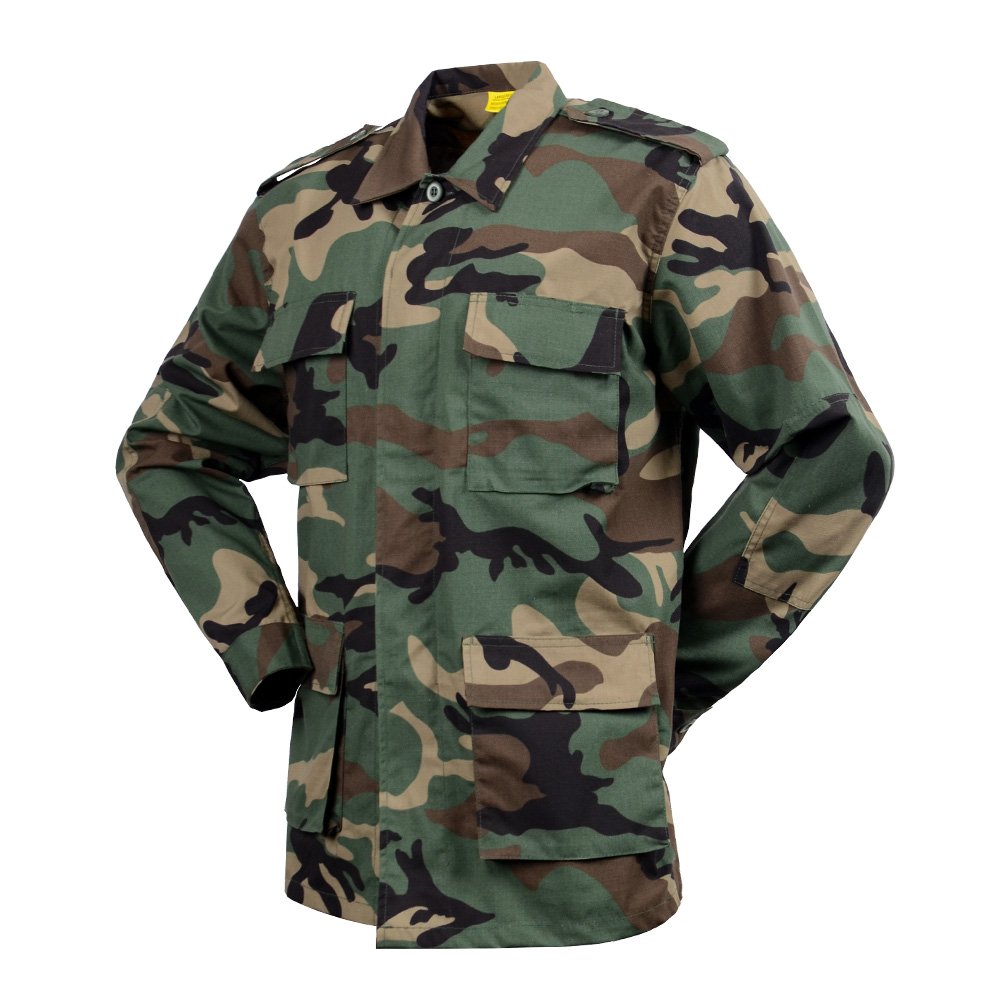
Design and Utility of BDU Camo
The standard bdu camo, in particular the Woodland style, employed a four-color bold setup with green, brown, black, and tan. This big-pattern aimed to split up the person’s outline from afar. As a result, it made the user tougher to spot in thick plant life.
Guangzhou Jingming Trading still provides top-notch BDU outfits. They stick to the classic T65/C35 fabric mix (65% polyester, 35% cotton). This fabric pick is on purpose. It delivers a good mix of air flow and rip strength. These traits were key features of the first BDU rules. The coat has a four-pocket layout with button fasteners. This setup ensures toughness in rough terrain. There, regular zippers could break down.
The Legacy of Universal Camouflage
The BDU did more than act as clothing. It stood for teamwork among services. All branches, from Army to Navy, Air Force, and Marines, used one pattern. This made the supply process easier. But fights moved to dry and city areas. Then, the downsides of just one forest-focused design showed up. That pushed for more variety in military camo types.
MARPAT: The Digital Revolution in Marine Stealth
In 2002, the U.S. Marine Corps stepped away from the shared BDU. They launched MARPAT. This change went beyond looks. It was a major advance in hiding tech.
The Science of Digital Fractals
MARPAT differs from the BDUs’ large, natural “blobs.” It uses tiny square pixels instead. This “digital” style forms a fractal look. That copies the surfaces in nature better. The small pattern tricks the eye up close. Meanwhile, the grouped pixels keep the outline broken from far away.
MARPAT came in two main types:
- Woodland: Best for woods and jungle spots.
- Desert: Made for dry, sandy, and rocky places.
Branch Identity and Exclusivity
MARPAT has two roles: hiding and marking. The Marines hid small “Eagle, Globe, and Anchor” (EGA) icons in the design. This kept the outfit just for the Corps. It signaled a big shift in the military camouflage uniform market. Now, each branch wanted its own designs. This built a unique group pride.
Technical Comparison: BDU vs. MARPAT
The table below points out the main contrasts between the old BDU and the fresh digital norms for focused teams.
| Feature | BDU (Woodland) | MARPAT (Digital) |
| Pattern Type | Macro-pattern (Large blobs) | Micro-pattern (Digital pixels) |
| Concealment Logic | Silhouette disruption | Texture matching + Fractal disruption |
| Primary Fabric | 65/35 Poly-Cotton Ripstop | Nylon-Cotton (NYCO) Blend |
| Pocket Design | 4-Pocket Front (Buttons) | Slanted Pockets (Velcro/Buttons) |
| Service Period | 1981 – 2011 (Varies by branch) | 2002 – Present |
| Weight | 215-220 g/m² | Typically heavier for durability |
Evolution of Modern Tactical Apparel
The change from BDU to MARPAT opened the door for today’s range in army camo types. Now, special groups often need items that link old strength with new comfort features.
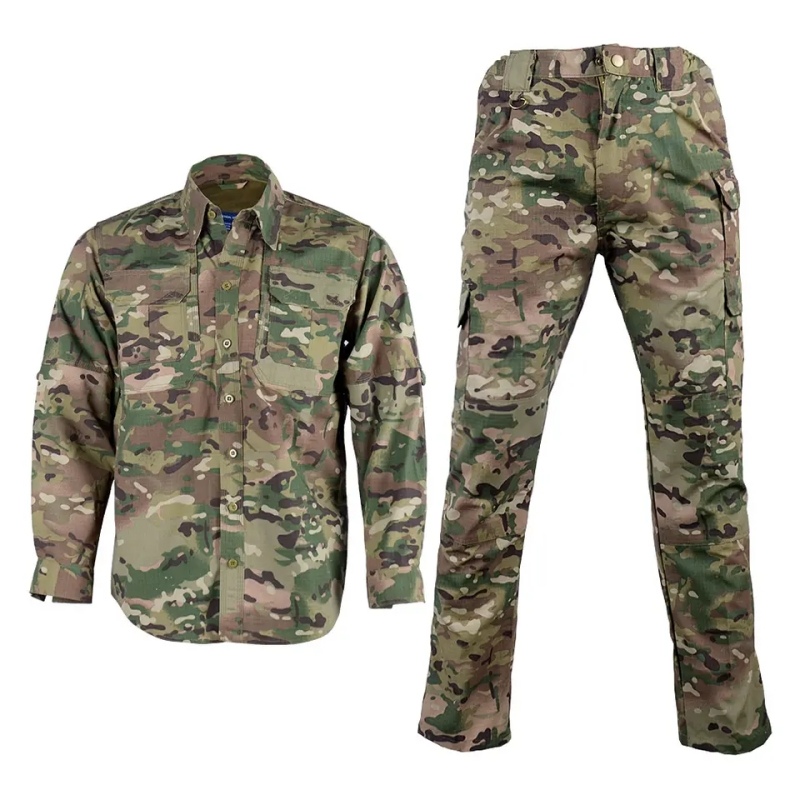
The Rise of “Frog Suits” and Combat Shirts
Today’s battles often mean wearing thick tactical vests. Old BDU coats felt too thick and warm under armor. So, makers created the “Frog Suit” (Flame Resistant Organizational Gear). Jingming Trading offers items like the G9 Frog Suit. It has a mixed build. The main body uses pure cotton for better air flow and sweat control under vests. The arms stay tough with camouflage prints for safety.
Specialized Protection and Modular Gear
The pattern is not the only part that has grown. Uniform functions have improved too. Take modern tactical pants, like the IX9 series. They now have extra fabric layers at knees and hips. This stops quick wear in tough spots. Plus, adding EVA pads right into elbows and knees helps. Soldiers can move freely. They do not need loose pads that slide around.
Global Market Impact and Sourcing
Guangzhou Jingming Trading has kept up with these past changes. We offer many options in both old and new military camo types. Jingming Trading makes almost twenty million sets each year. We have a 5,300 square meter storage space. This makes Jingming Trading a key player in worldwide supply lines. We especially help military deals in Africa and the Middle East.
Jingming Trading’s skill in OEM/ODM work lets people adjust patterns. Even as the military camouflage uniform market heads to trickier digital styles, we meet the exact wants of various defense groups.
Quality Assurance in Modern Manufacturing
To make sure digital patterns like MARPAT or classic BDU ones work well, firms use strict checks. These include a few steps. First, they do samples before full making to check color match. Next, they inspect the end products for rip strength and fabric heaviness. Finally, they send video proofs to buyers abroad. This confirms the items fit battle needs.
Conclusion
The path from the shared BDU to the service-only MARPAT shows the military’s steady work on hiding and practical use. The BDU gave a solid base for all services. MARPAT brought a smart way to “fit in.” That has shaped the time of digital hiding now. For groups buying tactical items, knowing these gaps matters. It helps pick the best tools for certain work zones.
FAQs
1. Is the BDU still used by militaries today?
Yes. Though the U.S. military has moved to newer styles like OCP, the BDU remains very common worldwide. Its low cost, strong build, and the good work of the Woodland pattern in thick woods keep it in demand.
2. Why did the military move away from buttons to Velcro and zippers?
Old BDUs picked buttons since they fix easily out in the field. But now, “Frog Suits” and battle coats use zippers and Velcro. These allow faster putting on. They also avoid sore spots or tight areas under heavy vests.
3. What is the benefit of a “Digital” pattern like MARPAT over a “Woodland” BDU?
Digital styles use small pixels to copy the “noise” in real settings. This lowers the chance of spotting by eyes or some night tools and tech sensors. It beats the big solid forms in a BDU.
4. Can tactical gear be customized for specific terrains?
Yes. With OEM help, firms like Jingming Trading make outfits in different army camo types. These cover desert, jungle, and city kinds to fit a client’s land needs.
5. What should I look for in high-quality tactical boots to match my uniform?
Current tactical boots need light stuff like microfiber or Oxford cloth plus tall support. Key parts include no-slip rubber bottoms and air-permeable insides. These suit hard battle tasks.



