
Breaking your combat boots in the right way stops blisters, keeps your feet happy, and makes moving in rough places easier. Let’s get the boots ready for action!
Why Breaking In Your Combat Boots Matters
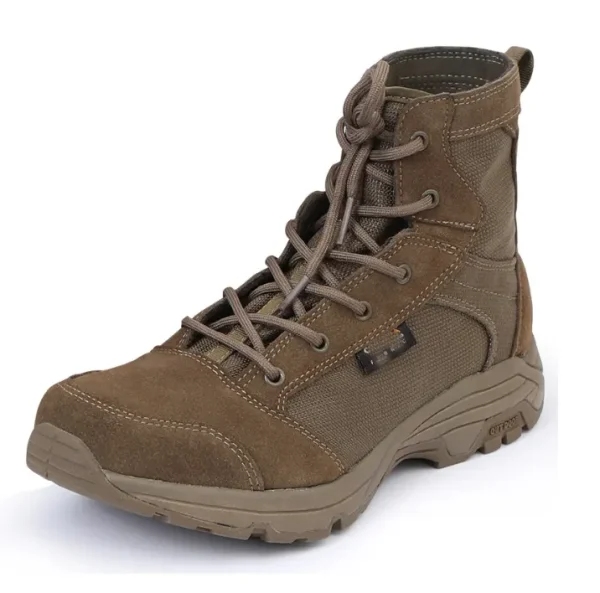
Combat boots are built strong to handle harsh spots while keeping your feet safe and supported. According to Guangzhou Jingming Trading Co., Ltd.’s product info, their tactical boots, like the 07 Combat Boots and M16 Boots, use tough stuff like cowhide, rubber, and Oxford cloth. These come with cool features, like grippy soles and breathable insides, great for military outdoor activities. But new boots can feel stiff at first. Breaking them in softens the materials and shapes them to your feet, so they feel cozy.
If you don’t break them in well, you might get blisters or sore feet. That can slow you down. Whether you’re wearing lightweight tactical boots for quick steps or distressed combat boots for a rugged look, breaking them in makes them feel like part of your feet. Let’s see how to do it smartly.
Choosing the Right Combat Boots
Before you start, pick the best boots for you. Guangzhou Jingming has lots of options, like high-top 07 Combat Boots, mid-top Tiger Wolf Boots, and low-top Saloman Boots. Each has special features for different needs.
| Boot Type | Weight (per pair) | Key Features | Best Use Case |
|---|---|---|---|
| 07 Combat Boots | 0.8 kg | Microfiber upper, non-slip rubber outsole, high-top ankle support | High-intensity tactical use, long walks |
| M16 Boots | 0.75 kg | Lightweight, breathable lining, all-terrain grip | Military training, outdoor hiking |
| Tiger Wolf Boots | 1 kg | Mid-top design, khaki/black options, wear-resistant | Tactical training, urban/desert environments |
| Saloman Low-top Boots | 1.1 kg | Cowhide upper, waterproof, gear sole texture | Hiking, daily commuting |
Choose a size with a bit of toe space—a thumb width at the front. Your heels should be close-fitting but not slipping off. Not sure? Guangzhou Jingming offers 7-day sample order delivery, so you can try one on before buying.
Step-by-Step Guide to Breaking In Your Combat Boots
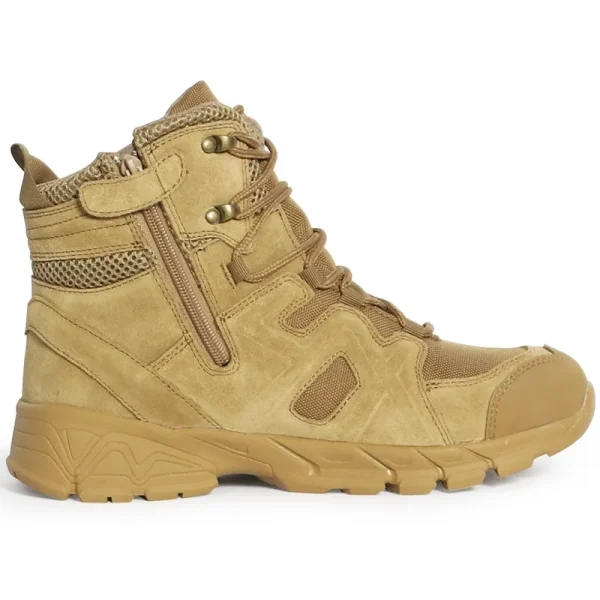
Tactical boots do take a while to break in, but it’s worth it for comfortable feet. These are the steps to break in your lightweight tactical boots or tactical combat boots for deployment.
Step 1: Wear Them Around the House
Start slow. Put on your boots with the socks you’ll use for activities—thick, sweat-wicking socks are best. Wear them at home for short times, like 30 minutes or an hour, over a few days. This gets the boots used to your feet without hurting them. For example, the A533-309 Boots have breathable mesh and PU uppers, so they feel nice early on. But they still need slow wear to fit perfectly.
Step 2: Gradually Increase Wear Time
After a few days inside, wear them longer. Try walking in your yard or around the block for an hour or two. Move like you normally do—walk, squat, or climb steps—to loosen the boots’ materials. The 07 Combat Boots have a light midsole that keeps your feet from getting tired. And they’ll feel even better once the microfiber upper shapes to your feet.
Step 3: Condition the Leather (If Applicable)
If your boots, like the Saloman Low-top Boots, have cowhide, treating the leather helps. Use a leather conditioner to make it soft and stop cracks. Spread a thin layer, let it soak, and wipe off extra. This keeps the boots bendy, especially for distressed combat boots. They might look worn, but they still need time to fit your feet right.
Step 4: Tackle Light Outdoor Activities
When your boots aren’t so stiff, try some light outdoor fun. A short hike or a walk on bumpy ground works well. The grippy rubber soles on M16 Boots or Tiger Wolf Boots are great for trails. Keep these trips under two hours to avoid sore spots. If you feel rubbing, stop and check it out. Fix laces or add padding if needed.
Step 5: Use Moisture to Mold the Boots
For really stiff boots, a little water can help. Lightly dampen the inside (don’t drench them), then wear them until dry. This shapes the boots to your feet. The VW Hiking Boots, with waterproof TPU and Oxford cloth, can take this trick without trouble. Just make sure they dry fully to avoid mold. Stuff them with newspaper and let them air out.
Step 6: Fine-Tune with Insoles and Laces
Tweaking your boots makes them super comfy. Need more help for your arches or heels? Add cushioned insoles. Adjust laces to hold your feet snug without squeezing. The A533-309 Boots’ high-top design and EVA midsole work great with insoles for all-day comfort.
Step 7: Test in Real-World Scenarios
When your boots feel good, test them in real stuff. Go for a long hike, a training session, or wear them all day. Guangzhou Jingming’s Flying Boots are made for military outdoor activities. Their airy linings keep your feet dry during tough tasks. If you feel any pain, go back to the earlier steps or see a cobbler for stretching.
Tips for Maintaining Comfort and Performance
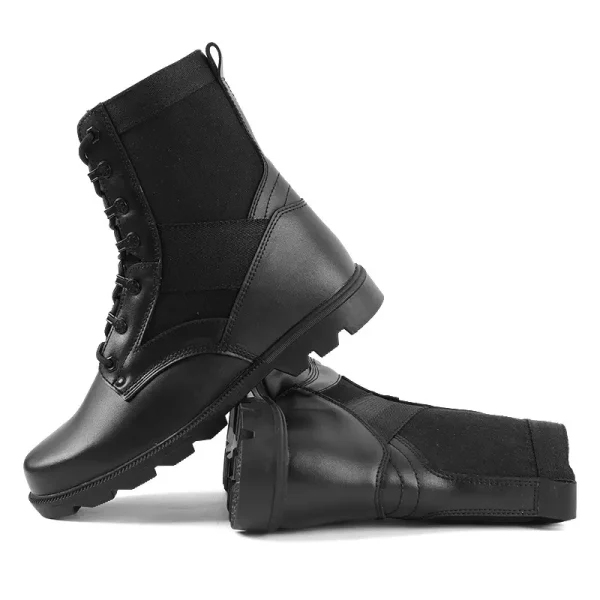
To keep your boots feeling awesome after breaking them in, try these tips:
- Clean Often: Wipe off dirt and mud after every use. For waterproof boots like the Lowa Low-top Tactical Boots, a wet cloth does the job. Dry them naturally, away from heaters.
- Store Right: Keep boots in a cool, dry place. Use a boot tree or stuff them with newspaper to keep their shape.
- Treat Leather Again: For leather boots like the Saloman Low-top, put on conditioner every few months to keep them soft.
- Check for Damage: Look at soles and stitching sometimes. The 07 Combat Boots’ rubber soles are tough, but heavy use might mean replacing them later.
Common Mistakes to Avoid
Breaking in boots isn’t just wearing them—it’s doing it wisely. Here’s what to skip:
- Going Too Fast: Don’t try a 10-mile hike on day one. Your feet need a slow start.
- Ignoring Rubbing: If you feel rubbing, fix it quickly with moleskin or bandages to stop blisters.
- Wrong Socks: Always wear the right socks. Thin ones cause rubbing; thick ones feel better.
- Too Much Water: Over-wetting can ruin boots, especially non-waterproof ones. Use water carefully.
FAQ: Breaking In Combat Boots
How long does it take to break in combat boots?
It takes about 1-2 weeks of slow wear. It depends on the boot’s stuff and how much you use them. Lightweight tactical boots like the M16 Boots might fit faster because of their bendy microfiber uppers.
Can I speed up breaking in?
Yeah, but don’t go overboard. Leather conditioner, a bit of water, or short wear times help. Always watch for soreness to stay safe.
What if my boots cause blisters?
Stop wearing them right away. Put moleskin or a bandage on the sore spot. Loosen laces or add insoles to ease pressure. Start again when your feet are better.
Are distressed combat boots easier to break in?
Not really. They might look used, but their cowhide, like in Saloman Boots, still needs time to fit your feet.
Can I break in boots without wearing them?
You can soften them with conditioner or a boot stretcher. But wearing them is the best way to shape them to your feet.
Final Thoughts
Breaking in your combat boots is a small job for big comfort and performance. Whether you’ve got lightweight tactical boots, tactical combat boots, or distressed combat boots, the steps are easy: go slow, tweak the fit, and take care of them. Guangzhou Jingming Trading Co., Ltd. has great options, from breathable Tiger Wolf Boots to sturdy 07 Combat Boots, all built for military outdoor activities. Follow these steps, skip the mistakes, and your boots will be ready for any adventure. Got questions or want a sample? Contact their team—they can send videos, photos, or help with custom orders. Now lace up and hit the trail!


