

What Makes Real Combat Boots Battle-Ready
Real combat boots get built to handle tough military settings. They work well in many places, like dry deserts or wet jungles. Soldiers wear them on long walks or quick runs. These boots focus on real use, strong hold, and long life, not looks.
Take the 07 Combat Boots, for instance. They have a light microfiber top that resists wear. This makes them good for hard tactical jobs. Plus, they include a grip rubber bottom and a soft middle sole. That soft part cuts down tiredness on long days.
Such choices in parts and style help the boots feel nice. At the same time, they keep soldiers ready for fights. In the end, a boot stays battle-ready if it helps troops on different lands and tasks. It does this without losing any strength.
Key Materials Used in Real Combat Boots
Builders pick strong, tough, and cosy stuff for real combat boots. They last well and feel good. Usual choices cover rubber for the bottoms, cowhide or microfiber for the tops, and mesh or polyester inside.
Look at M16 Boots as an example. They use rubber, cowhide, and Oxford cloth. This mix makes them grip well, fight wear, let air through, and resist rips.
Another fine pick is the A533-309 Boots. They have “a breathable mesh + PU upper” with a polyester inside layer. This pulls away sweat. Such stuff keeps feet dry and comfy for many hours.
Design Elements That Differentiate Military Boots from Hiking Boots
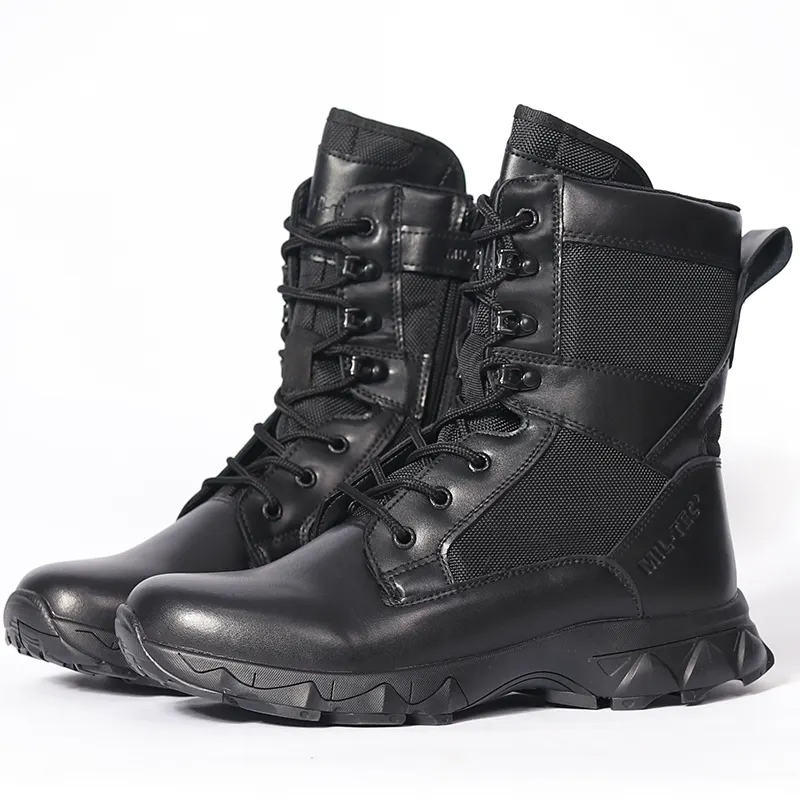
In military boots vs hiking boots, some style differences stand out clearly. Military boots suit fight scenes with wild ground, heavy loads, and fast moves. Hiking boots hold up okay. Yet they stress soft padding and ease for known paths.
Boots like the Flying Boots use a composite material upper, both protective and breathable. This handles rough bumps and hits well.
Also, many military boots have tall sides. This gives better ankle hold. Hiking gear for normal folks skips this much. Colors like black, khaki, and jungle green set special forces boots apart from plain outdoor shoes.
Traction and Outsole Technology in Special Forces Boots
Grip matters a lot in army work. One bad slide can end things quickly. Real combat boots add smart bottom tech for holding on to all kinds of ground, such as mud, sand, rocks, or wet spots.
The Tiger Wolf Boots come with a grip and a tough rubber bottom. It keeps steps steady on slippery or bumpy spots.
On top of that, short styles like the VW Hiking Boots use gear sole texture for better no-slide power. These parts aim right at quick moves and stopping dangers in tasks.
Ankle Support and Stability Features for Combat Environments
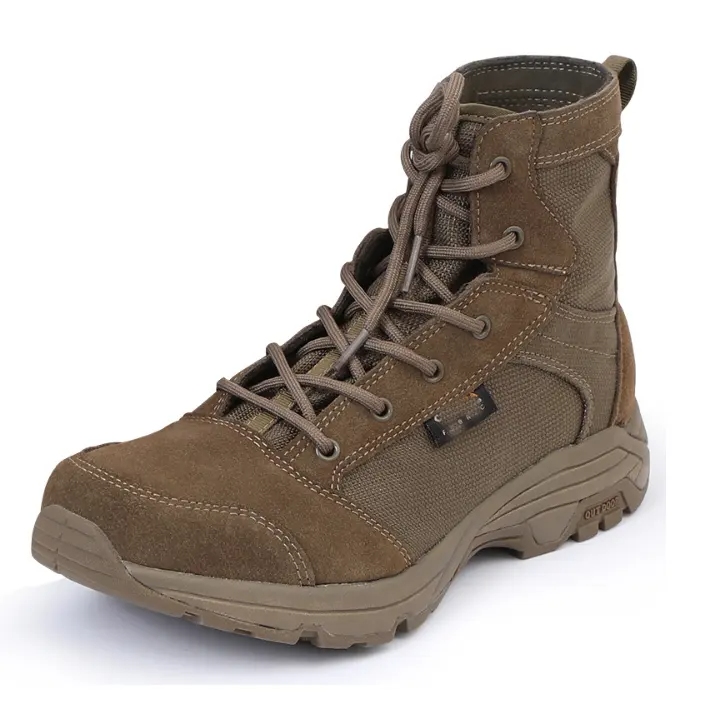
Fight spots call for jumps, fast runs, crawls, and heavy packs. So ankle safety counts big. It’s a must. Tall styles show up often in real combat boots, such as the M16 Boots or 07 Combat Boots.
These give enhanced ankle support. They cut the risks of twists or hurts on rough or strange lands. The extra firm build lets troops do hard jumps with less chance of side rolls.
Waterproofing and Breathability Considerations in Military Boots
Feet need to stay dry, but sweat must get out. Military boots balance this hard task. Waterproof parts block rain or mud from getting in. Breathable spots let inside dampness escape.
The A533-309 Boots mix water block with a breathable mesh + PU upper. This holds off wet and lets air flow.
Likewise, short styles like Saloman Low-top Boots use cowhide and waterproof cloth. They keep things dry but do not trap warmth. Such traits matter for long jobs. There, foot care ties straight to how well the team works.
Weight, Mobility, and Comfort Factors in Real Combat Boots
How much a boot weighs changes how long a soldier lasts. A thick boot guards well but slows steps. Makers need to mix solid build with easy moves.
The 07 Combat Boots tip the scale at just 0.8kg per pair. This fits long trips where speed and staying power rule. Their light, soft middle sole eases foot wear. That’s key to miles of ground.
Short styles like Lowa Tactical Boots bring the same perks. They have a lower cut for more bend in tight spots or city tasks.
The Role of Durability and Abrasion Resistance in Battle-Ready Footwear
How tough a boot is shows how it faces bad spots without breaking. Army life throws sharp stones, wire fences, bad chemicals, and big machines at them. Weak stuff fails fast.
The Storm Boots stand out with their “non-slip and wear-resistant rubber outsole.” It holds up under lots of use.
Plus, boots with composite tops give rub resistance and air flow. These extra bits make the boot last longer. They do this even with daily hard work.
How Special Forces Boots Are Tailored for Elite Operations
Elite teams need shoes for quiet steps, quick replies, and full fit to changes. Their jobs cover many lands and weather types in one go.
Flying Boots show this well. Their mid-height cut gives bend and guard. The air-through inside keeps dry. It also makes steps near silent for hidden moves.
What’s more, Tiger Wolf Boots work for the army and police training. This points to their fit for top jobs. They blend smart colors with strong stuff built for top all-around use.
Military Boot Standards vs. Civilian Hiking Boot Standards
Real combat boots face the army buy rules. These stress work measures way past hiking shoes. Things like fire hold, stab block, load help, and wet control count high.
Hiking boots for everyday folks get checked for ease and fun walks. They shine on paths. But they might miss the firm build that real combat boots or special forces boots need in danger spots.
As one of the top companies, Guangzhou Jingming Trading Co., Ltd. makes tactical shoes that hit strict quality marks. We always do this with pre-production samples before mass production; always final inspection before shipment.


